Home › Parliament & Government
Speaker of the House of Commons: Role, Election and Powers
The Speaker chairs the House of Commons, keeps order and decides who speaks, and must stay out of party politics. Here is what the job involves, how the Speaker is elected and where the office came from.
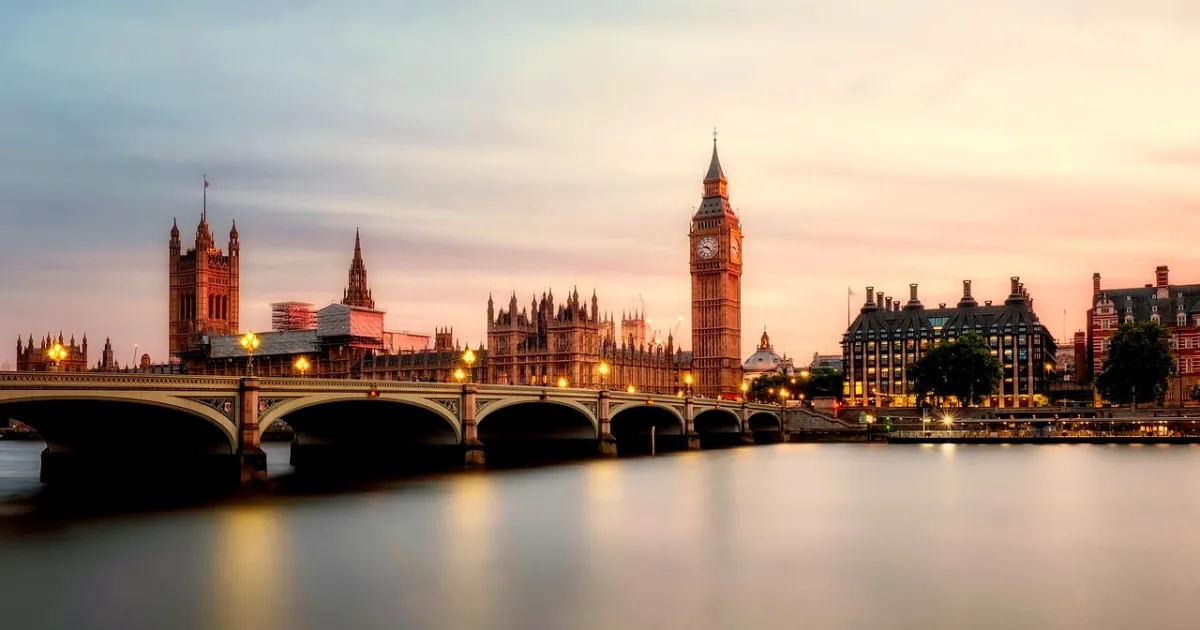
The Speaker of the House of Commons is the MP chosen by fellow MPs to preside over the House: chairing debates, deciding who speaks, keeping order and ruling on procedure. The Speaker is expected to be strictly impartial and gives up party ties on taking office. As of November 2026 the Speaker is Lindsay Hoyle, the MP for Chorley, who was first elected to the chair on 4 November 2019 and was re-elected after the general elections of 2019 and 2024.
What the Speaker does
The Speaker has the final say over how the business of the Commons is conducted. The main duties are these.
- Chairing debates. No MP may make a speech without being called by the Speaker, who by custom alternates between the government and opposition sides. MPs address their remarks to the Speaker, not to each other.
- Keeping order. The Speaker rules on points of order, and those rulings cannot be appealed. An MP who ignores the chair can be told to leave for the rest of the day's sitting. For more serious disobedience the Speaker can "name" the member, after which the House may vote to suspend them, for five sitting days on a first offence. In cases of grave disorder the Speaker can adjourn the sitting.
- Selecting amendments. The Speaker decides which of the amendments that have been tabled are put to a vote, and can set time limits on speeches when many members wish to speak.
- Putting the question. Before a vote the Speaker states the motion, judges the shouts of "aye" and "no", and calls a division if the result is unclear or challenged.
- Certifying money bills. Under the Parliament Acts the Speaker certifies which bills deal only with national taxation and spending, a decision the House of Lords cannot challenge. Our guide to how a bill becomes law explains why that matters.
- Running the House. The Speaker chairs the House of Commons Commission, which oversees the administration of the House, and decides on government requests to recall the Commons during a recess.
- Representing the Commons to the monarch, the House of Lords and other authorities.
Impartiality
By convention the Speaker cuts all ties with their political party on taking office and takes no part in party politics afterwards. The Speaker does not join in debates and does not vote, except to break a tie. The modern, non-partisan form of the office dates from the middle of the 19th century; earlier Speakers were often linked with the government of the day.
The Speaker remains an MP and still represents a constituency. At a general election the Speaker customarily stands not under a party label but as "The Speaker seeking re-election". By convention the main parties seldom put up candidates against a sitting Speaker, although other parties and independents sometimes do, and no Speaker has been returned unopposed since 1931.
The casting vote
If a vote is tied, the Speaker must give a casting vote. By convention this follows what is known as Speaker Denison's rule, not the Speaker's own opinion: the vote is given in favour of further debate where that is possible, and otherwise for leaving things as they are. A Speaker would therefore vote against an amendment or against the final passage of a bill. Ties are rare. There have been only 50 tied divisions since 1801, and the casting vote given on 3 April 2019 was the first by a Speaker since 1993.
How the Speaker is elected
The House must elect a Speaker at the start of every Parliament after a general election, and whenever the office falls vacant. A Speaker who wants to continue after an election is normally re-elected on a simple motion, without a ballot. The longest continuously serving MP who is not a minister, known as the Father or Mother of the House, presides until the choice is made.
When there is a vacancy, the House uses a secret ballot. The procedure was first used in June 2009:
- Each candidate must be nominated by at least twelve MPs, at least three of whom belong to a different party from the candidate.
- MPs vote by secret ballot. A candidate who wins more than half of the votes cast is the winner.
- If nobody does, the candidate with the fewest votes drops out, together with anyone who received less than 5 per cent, and MPs vote again.
- Once a candidate has a majority, the House votes on a formal motion to appoint that member.
In the election of 4 November 2019 there were seven candidates, and the winner received 325 of the 540 votes cast in the fourth and final ballot.
The Speaker-elect is then, by tradition, "dragged" to the chair by other MPs, a custom recalling the days when carrying the Commons' views to the monarch could be dangerous. The choice must also receive the monarch's approval, which is announced in the House of Lords and has been refused only once, in 1679. There is no formal procedure for removing a Speaker, though the House can pass a motion of no confidence, which is not binding.
Deputy Speakers
The Speaker is helped by three deputies, who are elected by the House. The most senior is the Chairman of Ways and Means, who by tradition presides over the Budget debate and chairs the House when it sits as a committee of the whole House. The other two are formally the First and Second Deputy Chairmen of Ways and Means.
When in the chair the deputies have the same powers as the Speaker, and like the Speaker they do not vote in divisions. By convention one deputy comes from the same side of the House as the Speaker's former party and two from the other side, so that neither government nor opposition loses voting strength. Unlike the Speaker, deputies stand as party candidates at general elections.
A short history of the office
The office is almost as old as Parliament. The earliest known presiding officer is Peter de Montfort, who presided over the Parliament held at Oxford in 1258. The continuous history of the speakership is usually dated from 1376, when Peter de la Mare spoke for the Commons in the "Good Parliament". Thomas Hungerford, who followed in 1377, was the first person recorded in the rolls of Parliament as holding the office of Speaker.
For centuries the Speaker was often seen as the Crown's agent in the Commons. A famous turning point came in 1642, when King Charles I entered the chamber to arrest five members and asked where they were. Speaker William Lenthall replied: "I have neither eyes to see nor tongue to speak in this place but as the House is pleased to direct me, whose servant I am here." More than 150 people have held the office. Betty Boothroyd, elected in 1992, was the first woman to do so.
The Lord Speaker
The House of Lords has its own presiding officer, the Lord Speaker, an office created under the Constitutional Reform Act 2005. Until July 2006 the Lord Chancellor presided over the Lords. The Lord Speaker is elected by members of the Lords using the alternative vote, for a term of five years and for no more than two terms. The role is much less powerful than its Commons counterpart, because the Lords largely regulates itself: the Lord Speaker does not call members to order, rule on points of order or select amendments. As of November 2026 the office is held by Lord Forsyth of Drumlean, who took it up on 2 February 2026.
| Speaker of the House of Commons | Lord Speaker | |
|---|---|---|
| Chosen by | MPs, by secret ballot when the office is vacant | Members of the Lords, by alternative vote |
| Term | Until Parliament is dissolved; elected again in each new Parliament | Five years, with a maximum of two terms |
| Decides who speaks | Yes | No; the House as a whole decides |
| Rules on points of order | Yes | No |
| Selects amendments | Yes | No |
| Party ties | Gives up party membership | Gives up the party whip or crossbench group |
Common questions
Who is the Speaker of the House of Commons?
As of November 2026 the Speaker is Lindsay Hoyle, MP for Chorley. He was elected Speaker on 4 November 2019 and re-elected on 9 July 2024, after that year's general election.
Does the Speaker vote?
Only to break a tie. By convention the casting vote is then given in favour of further debate or, where that is not possible, for the status quo, and not according to the Speaker's own views.
How is the Speaker chosen?
MPs elect the Speaker from among themselves. When the office is vacant they vote by secret ballot in successive rounds until one candidate has more than half the votes. A sitting Speaker is usually re-elected without a ballot after a general election.
Is the Speaker a member of a political party?
Not while in office. A new Speaker gives up party membership and stays out of party politics, although they continue to represent their constituency as an MP.
Sources
The Ballot Primer is independent and non-partisan. Spotted an error? Tell us.
Keep reading
The King's Speech: What It Is and What Happens at the State Opening
The King's Speech sets out the government's plans for a new session of Parliament. Who writes it, what happens at the State Openi…
23 November 2026
What Is a Constitutional Monarchy? How the UK System Works
In a constitutional monarchy the monarch is head of state but acts within rules that leave political decisions to elected institu…
21 November 2026
Prorogation: What It Means When Parliament Is Prorogued
Prorogation ends a session of Parliament without ending the Parliament itself. Here is how it works, what happens to unfinished b…
20 November 2026