The Alternative Vote Explained: How Instant-Runoff Voting Works
The alternative vote lets you rank candidates for a single seat, and the count eliminates the weakest until one is left. Here is how it works, how it compares with first past the post and STV, and what happened in the UK's 2011 referendum.
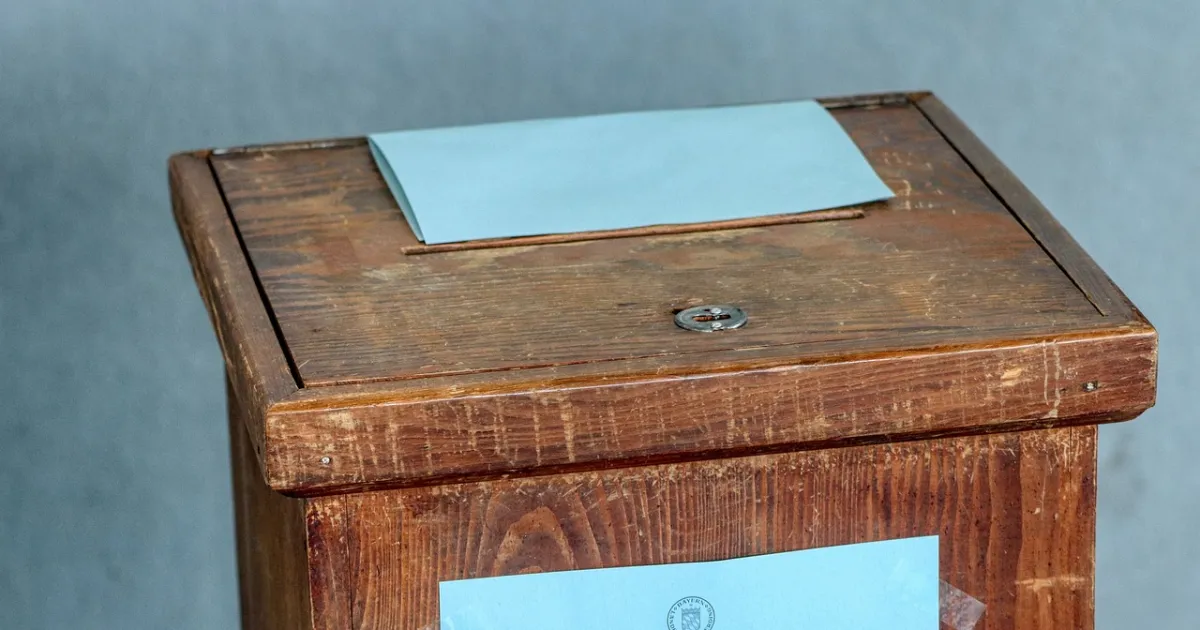
The alternative vote (AV) is a system for electing one person to one seat in which voters rank the candidates in order of preference. If no candidate has more than half of the first-preference votes, the candidate with the fewest votes is eliminated and their ballots pass to each voter's next choice. This repeats until one candidate is left with a majority of the votes still in the count.
The same system goes by several names. It is called the alternative vote in the UK and New Zealand, preferential voting in Australia, ranked-choice voting in the United States and Canada, and instant-runoff voting more generally, because it works like a series of run-off elections compressed into a single ballot.
How an AV count works
- Voters mark 1 against their first choice, 2 against their second, and so on.
- All first preferences are counted. A candidate with more than half of the valid votes wins straight away.
- If nobody has a majority, the candidate in last place is eliminated.
- Each of that candidate's ballots moves to the next candidate the voter ranked who is still in the race.
- The count repeats until a candidate has a majority of the continuing votes, or only one candidate remains.
A ballot whose ranked candidates have all been eliminated is described as exhausted and drops out of the count. Where exhausted ballots are common, the winner may finish with a majority of the votes still in play but not of all the ballots cast.
A worked example
A single seat, 10,000 valid votes and four candidates.
| Candidate | Round 1 | Round 2 (Daw eliminated) | Round 3 (Cedar eliminated) |
|---|---|---|---|
| Ash | 4,200 | 4,250 (+50) | 4,750 (+500) |
| Birch | 3,500 | 3,700 (+200) | 5,000 (+1,300) elected |
| Cedar | 1,600 | 2,000 (+400) | eliminated |
| Daw | 700 | eliminated | – |
| Exhausted | 0 | 50 | 250 |
In round 1 Ash leads with 42 per cent, short of a majority. Daw is eliminated, and Daw's 700 ballots move: 400 to Cedar, 200 to Birch and 50 to Ash, while 50 have no further preference. Still nobody has a majority, so Cedar is eliminated. Most of Cedar's voters ranked Birch next, and in the final round Birch has 5,000 of the 9,750 votes still in the count, a majority, and wins.
Under first past the post, Ash would have won with 4,200 votes, the largest single pile. AV changed the result because more voters preferred Birch to Ash once their lower preferences were taken into account.
How AV differs from first past the post and STV
| First past the post | Alternative vote | Single transferable vote | |
|---|---|---|---|
| Seats per constituency | One | One | Several |
| How you vote | One cross | Rank candidates | Rank candidates |
| Winning line | Most votes | Majority of continuing votes | A quota of votes |
| Proportional? | No | No | Broadly |
AV keeps the single-member constituency, so it does not make a parliament proportional. A party's share of seats across the country can still be very different from its share of the vote. Its main change is within each seat: the winner needs wider support, and voters can back a smaller candidate first without fear of wasting their vote.
The single transferable vote uses the same ranked ballot and transfers, but in multi-member constituencies with a quota, which produces broadly proportional results. In fact, AV is the single-seat form of STV: Ireland uses STV for most elections and the single-winner version for presidential elections and by-elections. For the wider debate about proportional systems, see first past the post vs proportional representation.
The UK's 2011 AV referendum
On 5 May 2011 the UK held a referendum on whether to replace first past the post with AV for elections to the House of Commons. The vote was provided for by the Parliamentary Voting System and Constituencies Act 2011, which received Royal Assent on 16 February 2011, and followed the coalition agreement made after the 2010 general election produced a hung parliament.
The ballot asked whether the alternative vote should be used instead of first past the post. The result:
- No: 13,013,123 votes (67.9 per cent)
- Yes: 6,152,607 votes (32.1 per cent)
- Turnout: 42.2 per cent of 45,684,501 registered voters
Yes won a majority in only 10 of the 440 local counting areas. The proposal was rejected, and first past the post continued to be used for Westminster elections.
Where AV and preferential voting are used
- Australia. Members of the House of Representatives are elected by preferential voting in single-member divisions. It was introduced for federal elections in 1918, first used at a by-election that December. Voters must number every candidate, or the ballot is informal and not counted, and voting has been compulsory since the 1925 federal election.
- Republic of Ireland. The president is elected by instant-runoff voting, and Dáil by-elections use the same single-winner method.
- Papua New Guinea. The National Parliament is elected by a form of instant-runoff voting.
- Sri Lanka. A preferential ballot is used to elect the head of state.
- United States. Maine uses ranked-choice voting for general and primary elections other than presidential contests, Alaska uses it in general elections after a top-four primary, and cities such as San Francisco and Minneapolis use it locally.
Australia shows the two main ways of handling ballots. Under full preferential voting, every candidate must be ranked, which prevents ballots from becoming exhausted but can make some papers invalid and encourage "donkey votes" that simply number candidates down the page. Under optional preferential voting, voters rank as many as they choose, which is simpler but lets ballots exhaust.
Arguments for and against
Supporters say AV reduces wasted votes, lets people vote for a smaller party or independent first without helping a candidate they dislike, makes some forms of tactical voting less useful, and means winners need broader backing than under first past the post.
Critics point out that AV does not produce proportional results and can sometimes return the same winner as first past the post. They also note technical weaknesses: in rare cases ranking a candidate higher can cause that candidate to lose, and a broadly acceptable moderate candidate can be eliminated early if they have few first preferences, an effect known as the "centre squeeze". Exhausted ballots can leave the winner without a majority of all votes cast.
Common questions
What is the alternative vote?
A system for single-seat elections in which voters rank candidates. The last-placed candidate is eliminated and their votes transferred, round by round, until someone has a majority of the remaining votes.
What was the result of the 2011 AV referendum?
The proposal was rejected on 5 May 2011, with 67.9 per cent voting No and 32.1 per cent voting Yes, on a turnout of 42.2 per cent.
Is the alternative vote proportional representation?
No. It elects one member per constituency, so the overall result is not proportional. The single transferable vote, its multi-member relative, is proportional.
Is AV the same as ranked-choice voting?
Yes. In the United States and Canada, instant-runoff voting is usually called ranked-choice voting, and in Australia it is called preferential voting.
Sources
The Ballot Primer is independent and non-partisan. Spotted an error? Tell us.
Keep reading

What Is a By-Election? Why They Happen and How They Work
A by-election is a contest for one seat that has fallen empty between general elections. Here is why UK by-elections happen, who …
9 November 2026
Voter ID in the UK: Photo ID to Vote and the Voter Authority Certificate
Voters in Great Britain now need photo ID to vote in person at many elections. Here is which elections it covers, what ID is acce…
9 November 2026

Single Transferable Vote Explained: How STV Works, Step by Step
Under the single transferable vote, you rank candidates in order and your vote moves on if it is not needed or cannot help. Here …
9 November 2026