Home › Parliament & Government
The King's Speech: What It Is and What Happens at the State Opening
The King's Speech sets out the government's plans for a new session of Parliament. Who writes it, what happens at the State Opening, how MPs debate and vote on it, and what it does not commit ministers to.
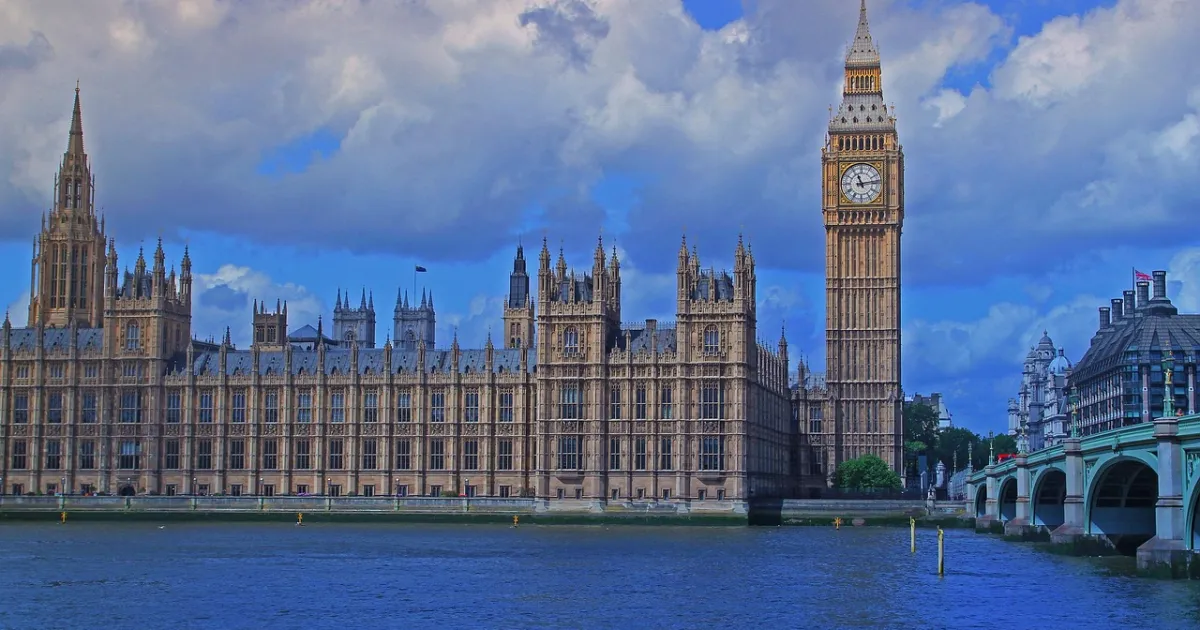
The King's Speech is the speech the monarch reads from the throne in the House of Lords at the State Opening of Parliament. It is written by the government, not by the King, and sets out the laws and policies ministers intend to pursue in the parliamentary session that the ceremony opens. The King's Speech of 2026 was delivered on 13 May 2026. It was written by the government in office that May; the Prime Minister changed on 20 July 2026, and no new State Opening had been held when GOV.UK was read on 18 November 2026.
What the King's Speech is
Its formal name is the Speech from the Throne, and GOV.UK publishes the text as His Majesty's most gracious speech to both Houses of Parliament. It marks the start of a parliamentary session. Until it has been delivered, neither the House of Commons nor the House of Lords can usually take up substantive business.
A parliament, the period between two general elections, is divided into sessions. The Institute for Government explains that a session usually lasts about a year, so the speech tends to be an annual event, but the first session after a general election is often longer. A two-year session meant there was no speech in 2011, the same happened in 2018, and the session that began after the 2024 general election ran for almost two years, so there was none in 2025.
The 2026 speech was delivered in the House of Lords on 13 May 2026, according to the text on GOV.UK, and opened the second session of the Parliament elected in 2024. A session ends with prorogation, and the next one begins with a new speech.
Who writes it and what it contains
The government drafts the speech; the monarch delivers it. The Royal Family's website says the speech is not drafted by the King but by the government, and GOV.UK publishes it under the name of the Prime Minister's Office as well as the King. By custom it is read in a neutral tone that gives no sign of the monarch's own views, and MPs and peers listen in silence.
Most of the text is a list of the bills the government plans to introduce. In the 2026 text on GOV.UK the name of each bill appears in square brackets after the sentence that announces it, and one measure is announced as a draft bill only. Two short formulas recur from year to year. One is addressed to MPs alone and tells them that estimates for the public services will be laid before them. The other closes the list: "Other measures will be laid before you" (the King's Speech, 2026). The Institute for Government notes that this second line gives the government room to bring in bills the speech did not mention. By custom, the Institute adds, the monarch also mentions any state visits planned for the session.
The government publishes background briefing notes on the same day. Those for 2026 run to 129 pages.
What happens at the State Opening
The State Opening is the only regular occasion that brings together the three parts of Parliament: the Sovereign, the House of Lords and the House of Commons. The day follows a fixed order.
- The Yeomen of the Guard carry out a ceremonial search of the cellars of the Palace of Westminster, a tradition that goes back to the Gunpowder Plot of 1605.
- One government MP, usually a whip holding the title of Vice-Chamberlain of the Household, is by tradition held hostage at Buckingham Palace until the monarch returns safely.
- The King travels from Buckingham Palace in a state coach escorted by the Household Cavalry. The Imperial State Crown goes ahead in its own carriage.
- At Westminster the King enters by the Sovereign's Entrance, puts on the crown and the robe of state in the Robing Room, and leads a procession through the Royal Gallery to the throne in the Lords chamber.
- The official known as Black Rod is sent to summon the Commons. The door of the chamber is shut in Black Rod's face and opened only after three knocks, a ritual that symbolises the independence of the Commons from the monarch.
- MPs walk to the Lords and stand at the Bar of the House, the line that non-members may not cross, while the King reads the speech.
The monarch does not have to attend in person. In 1959 and 1963 the speech was read for Elizabeth II by the Lord Chancellor, and Parliament was opened by a royal commission. In 2022 the then Prince of Wales delivered it as a counsellor of state.
The debate and the vote that follow
After the speech both Houses break until the afternoon. Before turning to its contents, each gives a formal first reading to a bill that is never meant to become law, the Outlawries Bill in the Commons and the Select Vestries Bill in the Lords, to show that each House may take up business of its own choosing. The debate then takes place on a motion for a humble address thanking the King, often called the Loyal Address.
| House of Commons | House of Lords | |
|---|---|---|
| Symbolic first bill | Outlawries Bill | Select Vestries Bill |
| Opening of the debate | Motion moved and seconded by two government backbenchers, followed by the Leader of the Opposition and the Prime Minister | Motion moved and seconded, then a short general discussion |
| Length | About six sitting days in recent years, each with a theme | Several days, each with a theme |
| Amendments and votes | Amendments are debated and voted on during the final two days; the Speaker may select up to four | By custom no votes are held |
The Commons vote matters because it tests whether the government can command the confidence of the House. A defeat on the address has historically been treated as an implicit loss of confidence, in the same family as a vote of no confidence. It last happened in 1924, when Stanley Baldwin's minority government was defeated and he resigned as Prime Minister. For a government with a majority the vote rarely causes difficulty; for a minority government, or one with a narrow majority, it is more of a test.
What the speech commits the government to
The speech is a statement of intent. It changes no law. Every bill it names still has to be introduced and passed by both Houses in the ordinary way, as set out in how a bill becomes law, and the government is not limited to the bills it mentioned. What the speech does provide is a public statement of the government's priorities and legislative programme for the session.
It also has a procedural effect on other business. The Institute for Government points out that motions relating to money cannot be taken until the debate on the address is over, unless MPs vote to suspend the rules, so a Budget cannot be held before then.
Common questions
When was the King's Speech 2026?
GOV.UK records that it was delivered in the House of Lords on 13 May 2026. It opened the second session of the Parliament elected at the 2024 general election, after a first session of almost two years.
Does the King write the King's Speech?
No. The government writes it and the King reads it out. The wording refers throughout to what the government and ministers will do, and the delivery is deliberately neutral.
Can MPs vote against the King's Speech?
Yes. MPs can table amendments to the address in reply and vote on them at the end of the Commons debate. A government defeat is rare; the most recent was in 1924.
Is there a King's Speech every year?
Usually, because most sessions last about a year. When a session runs longer, as the first session after a general election often does, a calendar year can pass without one: there was no speech in 2011, 2018 or 2025.
Sources
The Ballot Primer is independent and non-partisan. Spotted an error? Tell us.
Keep reading
What Is a Constitutional Monarchy? How the UK System Works
In a constitutional monarchy the monarch is head of state but acts within rules that leave political decisions to elected institu…
21 November 2026
Prorogation: What It Means When Parliament Is Prorogued
Prorogation ends a session of Parliament without ending the Parliament itself. Here is how it works, what happens to unfinished b…
20 November 2026
Chancellor of the Exchequer: What the Role Is and What It Does
The Chancellor of the Exchequer heads the Treasury, presents the Budget and sets the framework for tax, spending and the inflatio…
19 November 2026