Home › Parliament & Government
What Is a Constitutional Monarchy? How the UK System Works
In a constitutional monarchy the monarch is head of state but acts within rules that leave political decisions to elected institutions. The UK's version, its conventions and how other countries differ.
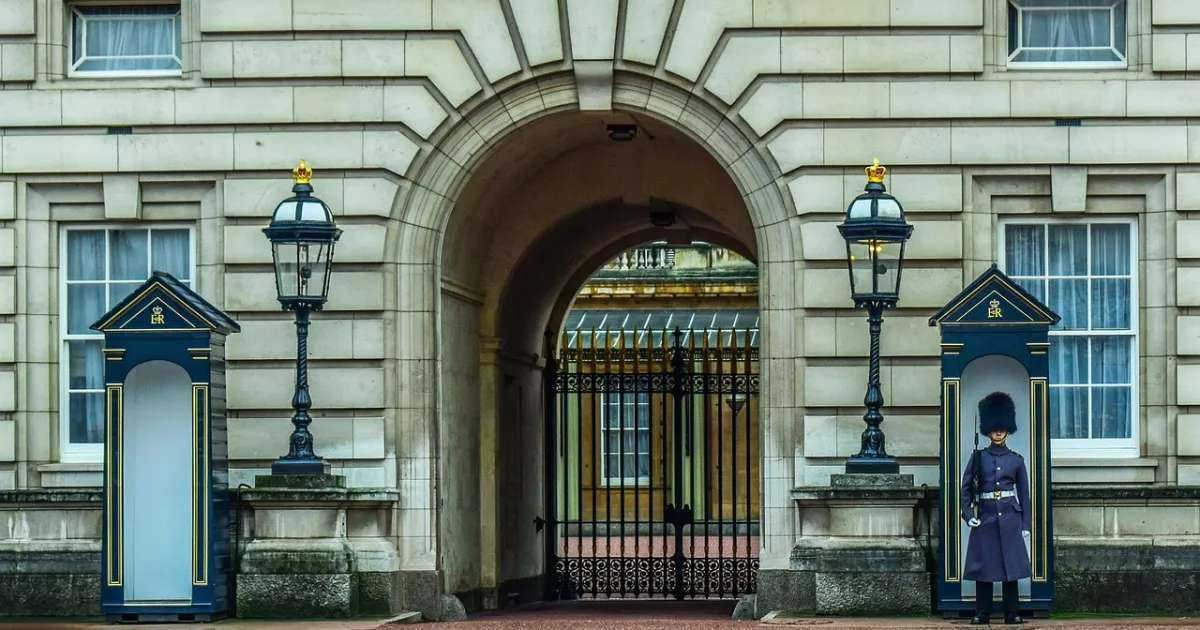
A constitutional monarchy is a system in which a hereditary monarch is head of state but acts within rules that leave law-making and political decisions to elected institutions. The United Kingdom is one. The King is Head of State, the ability to make and pass legislation rests with an elected Parliament, and the legal powers that still belong to the Crown are used by ministers or on their advice.
What the term means
A monarchy is a system in which the head of state inherits the office and usually holds it for life. What makes a monarchy constitutional is the set of rules that bind the monarch to act in accordance with democratic principles instead of governing by personal wish. The opposite is an absolute monarchy, in which the monarch is the only decision-maker.
Those rules take different forms. Some countries write them into a single constitutional text. The UK has no such document, and its limits on the Crown are spread across statutes, court decisions and unwritten conventions; the site's guide to the UK constitution explains how those sources fit together. The amount of power left to the monarch also varies from country to country.
How the UK's version works
The Cabinet Manual, the government's own guide to how it operates, published in 2011, states plainly that the UK is a constitutional monarchy. It lists the Sovereign's formal positions: Head of State, Head of the Armed Forces, Supreme Governor of the Church of England and fount of honour. The Sovereign appoints the Prime Minister and, on the Prime Minister's advice, other ministers, opens each session of Parliament and gives the Royal Assent that turns a bill into law.
Many of these powers come from the Royal Prerogative, which the Manual calls the residual power inherent in the Sovereign. Ministers now exercise the bulk of the prerogative powers, either in their own right or through advice which the Sovereign is constitutionally bound to follow. The table shows how the main formal powers work in practice.
| Formal power of the Crown | How it is used in practice |
|---|---|
| Appointing the Prime Minister | The Sovereign invites the person who appears most likely to command the confidence of the House of Commons; the parties are expected to make clear who that is |
| Appointing other ministers | Done on the Prime Minister's advice |
| Royal Assent to bills | Given once a bill has passed its parliamentary stages; assent has not been withheld since 1708 |
| Dissolving Parliament before an election | A prerogative power, revived by the Dissolution and Calling of Parliament Act 2022 and used on the Prime Minister's advice |
| Opening and proroguing Parliament | The speech read at the opening is written by the government; prorogation follows ministerial advice and can be reviewed by the courts |
| Command of the Armed Forces | Decisions on deployment are taken by ministers |
The last time a monarch used the reserve power to dismiss a Prime Minister was in 1834, and the Cabinet Manual notes that the episode was regarded as having undermined the Sovereign.
What the monarch still does in person
The King is not shut out of government business. The Cabinet Manual says the Sovereign is entitled to be informed and consulted, and to advise, encourage and warn ministers, a formula that echoes the three rights Walter Bagehot set out in The English Constitution: to be consulted, to encourage and to warn. The Prime Minister has a private audience with the monarch every week while Parliament is in session, and what is said there stays secret.
The visible duties are ceremonial and representative. The King reads the King's Speech at the State Opening of Parliament, undertakes and hosts state visits and confers honours, most of them on the government's advice. The Royal Family's own description adds a less formal role as Head of Nation: a figure the country can identify with and take pride in, who stands for stability and continuity, recognises achievement and supports voluntary service.
All of this depends on political neutrality. The convention recorded in the Cabinet Manual is that the Sovereign should not be drawn into party politics. If it is unclear after an election who should form a government, it is for the politicians to settle the matter and tell the Palace the answer.
What is law and what is convention
Very little of the above is written into legislation. Statute fixes some points: the Bill of Rights that followed the revolution of 1688 placed the Crown under limits agreed with Parliament, the Act of Settlement deals with the succession, and the 2022 Act mentioned above deals with dissolution. The courts can decide whether a prerogative power exists and whether it has been used properly. In 2019, in the second Miller case, an attempted prorogation of Parliament was ruled unlawful.
The rest is convention: understandings that have grown up about how the powers are to be used, which are not legal rules. The rule that the monarch acts on ministerial advice is of this kind. So is the expectation that Royal Assent will be given. The Constitution Society, which describes itself as an independent educational foundation with no connection to any political party, notes that a monarch could in theory decline to follow advice, but that doing so would be highly controversial and could damage the monarchy itself.
How other constitutional monarchies compare
Constitutional monarchs reign in the Netherlands, Spain and Denmark among other European states, and countries such as Australia and Canada share their monarch with the UK. The balance differs in each. Sweden's government describes the country as a constitutional monarchy whose monarch has a symbolic function and almost exclusively ceremonial duties; there it is the Speaker of the Riksdag, not the King, who proposes a candidate for Prime Minister. Japan's constitution calls the Emperor the symbol of the State and says he has no powers related to government.
The UK sits at a different point. Its monarch keeps the formal powers to appoint the Prime Minister and assent to laws, and the restraint comes from convention more than from written text.
The arguments for and against
Whether a hereditary head of state belongs in a democracy is a long-running debate, and the Constitution Society summarises both cases. Supporters argue that the monarchy gives the political system continuity while governments come and go, offers a neutral focal point above party politics, helps the country's standing abroad, and avoids the risks of an elected president, who might use the office to pursue a course of their own.
Critics reply that no one should become head of state by birth without any means for the public to choose, remove or hold them to account. They also argue that the institution is tied to an established church that many people in the UK today do not belong to, that a hereditary monarch lacks the democratic standing to resist a government acting improperly, and that the prerogative lets ministers avoid full accountability.
Common questions
Is the UK a constitutional monarchy?
Yes. Both the Cabinet Manual and the Royal Family's website use the term. The King is Head of State, while laws are made by Parliament and the government is led by ministers answerable to it.
Can the King refuse to sign a law?
In legal theory Royal Assent could be withheld, but no monarch has done so since 1708. By convention assent is given to any bill that has completed its passage through Parliament.
What is the difference between a constitutional and an absolute monarchy?
An absolute monarch is the sole decision-maker. A constitutional monarch is bound by law and convention, and in democracies of this kind real decisions are taken by an elected parliament and the ministers who answer to it.
Who holds power in a constitutional monarchy like the UK?
Ministers do, for as long as their government has the confidence of the House of Commons. They use the Crown's powers themselves or advise the King on how to use them, and Parliament holds them to account.
Sources
- The Cabinet Manual, 1st edition 2011 (GOV.UK)
- The role of the Monarchy (The Royal Family)
- The Monarchy (The Constitution Society)
- Dissolution and Calling of Parliament Act 2022, section 2 (legislation.gov.uk)
- The Constitution of Japan (House of Representatives, Japan)
- How Sweden is governed (Government Offices of Sweden)
The Ballot Primer is independent and non-partisan. Spotted an error? Tell us.
Keep reading
Prorogation: What It Means When Parliament Is Prorogued
Prorogation ends a session of Parliament without ending the Parliament itself. Here is how it works, what happens to unfinished b…
20 November 2026

Chancellor of the Exchequer: What the Role Is and What It Does
The Chancellor of the Exchequer heads the Treasury, presents the Budget and sets the framework for tax, spending and the inflatio…
19 November 2026

What Does the Deputy Prime Minister Do? The Role in the UK
Deputy Prime Minister is a title in the gift of the UK Prime Minister, not an office set up by law. What the holder does, how the…
18 November 2026