What Is ECOWAS? Members, Aims and Institutions Explained
ECOWAS, the Economic Community of West African States, is a regional bloc founded in 1975 and based in Abuja. This guide covers its treaties, institutions, current membership and its rules on democracy.
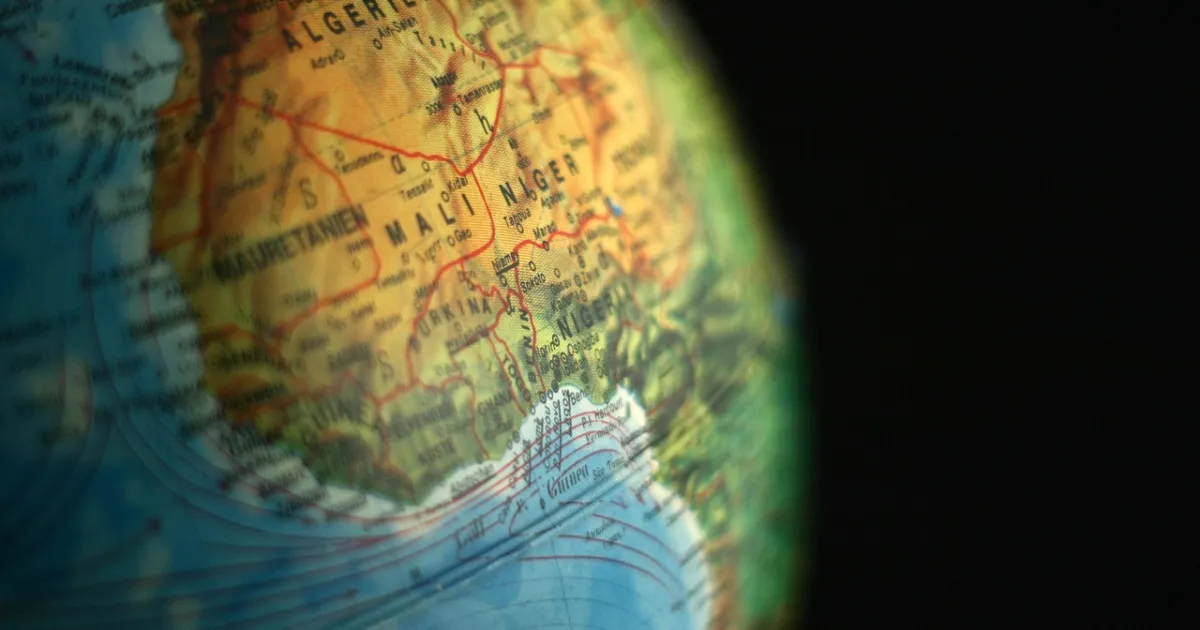
ECOWAS is the Economic Community of West African States, a regional organisation of West African countries that works for economic integration, peace and security. It was created by the Treaty of Lagos, signed on 28 May 1975, and has its headquarters in Abuja, Nigeria. As of November 2026 the ECOWAS website lists 12 member states.
ECOWAS began as an economic project. Over time it also took on a political role, with common rules on elections and constitutional government and a record of sending peacekeeping forces to its member states.
How ECOWAS began
According to ECOWAS's own history, the proposal for a West African union was made in 1972 by the leaders of Nigeria and Togo. It led to the Treaty of Lagos in 1975. Cabo Verde joined in 1976.
The treaty was revised in 1993. The Revised Treaty, signed in Cotonou, Benin, on 24 July 1993, widened the organisation's scope and powers. ECOWAS explains that the Community was first presented as a purely economic initiative and that political events in the region led to the revision.
The organisation works in three official languages: English, French and Portuguese.
What ECOWAS is for
Article 3 of the Revised Treaty sets out the aims. The overall goal is to promote co-operation and integration leading to "an economic union in West Africa". To get there, the treaty provides for:
- a common market, built by removing customs duties and non-tariff barriers between member states;
- the "removal, between Member States, of obstacles to the free movement of persons, goods, services and capital";
- a right of residence and establishment for citizens of member states.
Free movement
The best-known practical result is free movement. A Protocol on Free Movement of Persons, Residence and Establishment was adopted in May 1979. Its first phase removed visa requirements for stays of up to 90 days. An ECOWAS passport was introduced as a common travel document in December 2000.
Trade and money
Trade in goods between members is covered by the ECOWAS Trade Liberalisation Scheme. A group of members formed the West African Monetary Zone in 2000 to plan a common currency, to be called the eco.
The institutions
Article 6 of the Revised Treaty lists the Community's institutions. The main ones are shown below, with their present-day names.
| Institution | What it is |
|---|---|
| Authority of Heads of State and Government | The "supreme institution of the Community", made up of the heads of state or government of the member states. It is responsible for the general direction and control of the Community. |
| Council of Ministers | Made up of the minister in charge of ECOWAS affairs and any other minister of each member state. |
| ECOWAS Commission | The executive body, led by a President. The treaty's Executive Secretariat was turned into a Commission in 2007. |
| ECOWAS Parliament | The Community Parliament, with seats shared among member states according to population and headed by a Speaker. |
| Community Court of Justice | Created by a 1991 protocol and made a Community institution by the Revised Treaty. It sits in Abuja. |
The Court rules on disputes about the interpretation and application of Community law. A Supplementary Protocol of 2005 widened its jurisdiction to include human rights claims brought by individuals, and most of its decided cases since then have concerned human rights.
ECOWAS also has specialised bodies, among them the ECOWAS Bank for Investment and Development, the West African Health Organisation and GIABA, the regional body that works against money laundering and the financing of terrorism.
Who is a member?
As of November 2026 the ECOWAS website lists the following 12 member states:
- Benin
- Cabo Verde
- Côte d'Ivoire
- The Gambia
- Ghana
- Guinea
- Guinea-Bissau
- Liberia
- Nigeria
- Senegal
- Sierra Leone
- Togo
Withdrawals
Four states have left the organisation.
- Mauritania withdrew in December 2000.
- Burkina Faso, Mali and Niger announced jointly on 28 January 2024 that they were withdrawing. The ECOWAS Commission stated on 29 January 2025 that their withdrawal "has become effective today, 29th January 2025".
The one-year gap reflects Article 91 of the Revised Treaty, under which a member state that wishes to withdraw must give one year's written notice and remains bound by its obligations during that year.
In the same statement the Commission said that ECOWAS would keep its doors open. It asked authorities, until further notice, to go on recognising passports and identity cards bearing the ECOWAS logo held by citizens of the three countries, to continue treating their goods and services under the Trade Liberalisation Scheme, and to continue visa-free movement, residence and establishment for their citizens. These arrangements were to last until the heads of state decided how ECOWAS would deal with the three countries in future. Readers should check the ECOWAS website for the position after the date of this article.
The 2001 Protocol on Democracy and Good Governance
ECOWAS has detailed common rules on how its member states should be governed. They are set out in Protocol A/SP1/12/01 on Democracy and Good Governance, signed in Dakar on 21 December 2001. It supplements a 1999 protocol on conflict prevention, management, resolution, peacekeeping and security.
Article 1 lists "constitutional principles shared by all Member States". They include:
- separation of powers between the executive, the legislature and the judiciary, and independence of the judiciary;
- that "every accession to power must be made through free, fair and transparent elections";
- "zero tolerance for power obtained or maintained by unconstitutional means";
- armed forces that are apolitical and under the command of a legally constituted political authority;
- the freedom of political parties to form and carry out their activities within the law.
The Protocol also provides for consequences. Under Article 45, where democracy is "abruptly brought to an end by any means" or there is massive violation of human rights in a member state, ECOWAS may impose sanctions. In increasing order of severity these are: refusing to support the state's candidates for elective posts in international organisations, refusing to hold ECOWAS meetings there, and suspending the state from all ECOWAS decision-making bodies. During a suspension ECOWAS is to continue to monitor and encourage the state's return to constitutional order.
The Protocol sits alongside continent-wide texts such as the African Charter on Democracy, Elections and Governance.
ECOMOG: the peacekeeping arm
ECOMOG stands for the ECOWAS Cease-fire Monitoring Group. It was set up in 1990 as a multinational force drawn from the armies of member states, to intervene in the civil war in Liberia. Nigeria supplied most of its personnel and resources. ECOMOG forces were later deployed in Sierra Leone in 1997 and in Guinea-Bissau in 1999. The 2001 Protocol describes ECOMOG as "the Community's intervention force". ECOWAS has sent forces to member states on several later occasions, including to The Gambia in 2017.
ECOWAS and other African bodies
ECOWAS is one of several regional groupings on the continent. It operates alongside the African Union, which brings together states from every region of Africa, and it has counterparts elsewhere, such as SADC in southern Africa.
Common questions
What does ECOWAS stand for?
Economic Community of West African States. It was founded by the Treaty of Lagos on 28 May 1975 and is based in Abuja, Nigeria.
How many countries are in ECOWAS?
The ECOWAS website listed 12 member states in November 2026: Benin, Cabo Verde, Côte d'Ivoire, The Gambia, Ghana, Guinea, Guinea-Bissau, Liberia, Nigeria, Senegal, Sierra Leone and Togo.
Have Mali, Burkina Faso and Niger left ECOWAS?
Yes. They announced their withdrawal in January 2024, and the ECOWAS Commission stated that it became effective on 29 January 2025, while keeping some arrangements for their citizens in place for the time being.
What is the ECOWAS Protocol on Democracy and Good Governance?
It is a 2001 agreement that sets shared constitutional principles for member states, including free, fair and transparent elections and zero tolerance for power obtained or maintained by unconstitutional means. It allows ECOWAS to impose sanctions when democracy is abruptly ended.
Sources
- ECOWAS: History
- ECOWAS: Member States
- ECOWAS: Press statement on the withdrawal of Burkina Faso, Mali and Niger, 29 January 2025
- ECOWAS: Protocol A/SP1/12/01 on Democracy and Good Governance
- African Court on Human and Peoples' Rights: ECOWAS Revised Treaty (text)
- Wikipedia: Economic Community of West African States
The Ballot Primer is independent and non-partisan. Spotted an error? Tell us.
Keep reading
The Scramble for Africa: What It Was and Why It Still Matters
Between the early 1880s and 1914 European powers took control of about 90 per cent of Africa. This guide explains the causes, wha…
22 November 2026
What Was Apartheid? Meaning, Laws and How It Ended
Apartheid, an Afrikaans word meaning apartness, was the system of racial segregation and white minority rule enforced by law in S…
19 November 2026
The Bill of Rights in South Africa: Chapter 2 of the Constitution Explained
The Bill of Rights is Chapter 2 of South Africa's 1996 Constitution. It runs from section 7 to section 39 and covers civil, polit…
17 November 2026