The Scramble for Africa: What It Was and Why It Still Matters
Between the early 1880s and 1914 European powers took control of about 90 per cent of Africa. This guide explains the causes, what the Berlin Conference of 1884–85 did and did not decide, and the effects historians describe.
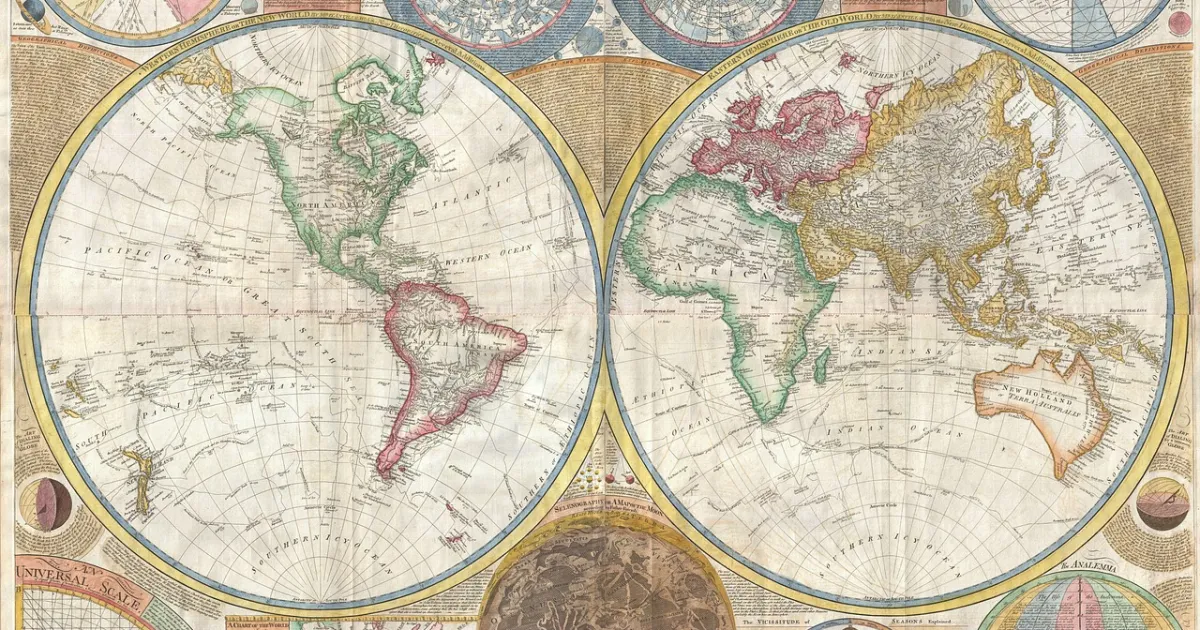
The Scramble for Africa was the rapid conquest and partition of almost the whole African continent by European powers between the early 1880s and 1914. In the 1870s European states controlled about 10 per cent of Africa, mostly on the coasts. By 1914 they controlled about 90 per cent, and only Ethiopia and Liberia remained outside European rule.
The period and the powers
Before 1880 the European presence consisted largely of coastal trading posts. The main holdings were Angola and Mozambique under Portugal, the Cape Colony under Britain and Algeria under France. South African History Online dates the phrase itself to 1884 and uses it for the twenty-odd years in which the powers explored, divided and conquered nearly the entire continent. The same process is also called the Partition of Africa.
Seven states took part: Belgium, Britain, France, Germany, Italy, Portugal and Spain. Britain and France ended with the largest empires.
Why it happened
The historian Baba G. Jallow, writing for the development journal D+C, argues that the scramble was driven entirely by European interests. Industrialisation raised the demand for raw materials, factories produced surplus goods that needed markets, and profits sought new outlets for investment. Nationalism added to the pressure: the imperial ambitions of newer states such as Germany, Italy and Belgium unsettled Britain and France, particularly after France's defeat in the Franco-Prussian War of 1870–71.
Technology made conquest practicable. Steamships, railways and the telegraph shortened distances, and quinine gave Europeans an effective treatment for malaria, which had kept them out of much of the tropical interior.
The immediate trigger lay in the Congo basin. King Leopold II of Belgium sent the explorer Henry Morton Stanley there in 1879, and a French officer, Pierre de Brazza, raised the French flag at Brazzaville in 1881. France occupied Tunisia, Britain intervened in Egypt in 1882, and Germany began expeditions of its own.
The Berlin Conference of 1884–85
To prevent these rivalries from turning into war, the German chancellor Otto von Bismarck convened a conference in Berlin. It sat from 15 November 1884 to 26 February 1885. Fourteen powers were represented: twelve European states, the Ottoman Empire and the United States. No African ruler or representative took part.
The conference ended with a treaty, the General Act, whose title lists its subjects:
- freedom of trade in the basin of the Congo;
- the slave trade, which the powers declared forbidden in the Congo basin territories (Article 9);
- the neutrality of those territories;
- free navigation of the Congo and the Niger for the merchant ships of all nations (Articles 13 and 26);
- rules for future occupation on the coast of the continent.
The last item is the one most often cited. Under Article 34 a power that took possession of land on the African coast, or assumed a protectorate there, had to notify the other signatories. Under Article 35 the signatories recognised an obligation to establish enough authority in the regions they occupied on the coasts to protect existing rights and freedom of trade.
What the conference did not decide
The General Act itself draws no borders. School and popular accounts often say that the continent was divided up at Berlin, and South African History Online calls the conference the formalisation of the scramble. Many historians put it differently. One of them, Simon Katzenellenbogen, summed up the point in the title of a 1996 essay: "It didn't happen at Berlin" (in the collection African Boundaries).
A study published in the American Political Science Review in 2024 by Jack Paine, Xiaoyan Qiu and Joan Ricart-Huguet supports that view with data. It finds that the conference created frontiers only for what became the Congo Free State, most of which were later revised. By the late 1880s Europeans had still drawn no borders for most of the continent. Most borders were first created in the 1890s, through agreements between pairs of powers, and a majority were substantially revised in the twentieth century. The General Act's own occupation rules, as its wording shows, applied to the coasts.
The Congo was the exception. The conference gave international recognition to Leopold's International Association of the Congo, and the Congo Free State was formally created a few months later. BBC Bitesize reports the estimate of many historians that as many as 10 million people died under Leopold's rule; estimates vary widely. Belgium annexed the territory as a colony in 1908.
Colonial rule by 1914
| Date | Event |
|---|---|
| 1870s | European states control about 10 per cent of Africa, mainly on the coasts |
| 1879 | Leopold II sends Henry Morton Stanley to the Congo |
| 1881 | The French flag is raised at Brazzaville |
| 1882 | Britain intervenes in Egypt |
| 1884–85 | Berlin Conference; the General Act is signed on 26 February 1885 |
| 1896 | Ethiopia defeats Italy at Adwa and its independence is recognised in the Treaty of Addis Ababa |
| 1908 | Belgium annexes the Congo Free State |
| 1914 | About 90 per cent of Africa is under European control |
Ethiopia stayed independent until Italy occupied it in 1936. Among the territories Britain acquired in these years were those that are now Kenya, Uganda, Zimbabwe, Botswana and Malawi. Germany was made to give up its colonies after its defeat in the First World War, and most African colonies gained independence in the decades after the Second.
Lasting effects that historians describe
The clearest inheritance is the map. Meeting in Cairo in July 1964, the heads of state of the Organisation of African Unity declared that all member states pledged to respect the borders existing on their achievement of national independence. The organisation was succeeded in 2002 by the African Union.
Scholars disagree about how much harm those borders did. The economists Stelios Michalopoulos and Elias Papaioannou, in a 2016 article in the American Economic Review, studied ethnic homelands that colonial borders split between two or more countries. They found political violence there to be more frequent, more severe and longer-lasting, and people from split groups to be economically disadvantaged. Paine and his co-authors revise the common view that the lines were arbitrary: by their count, historical political frontiers directly affected 62 per cent of the bilateral borders, and rivers and lakes formed borders far more often than straight lines did. They add that the imposition of states from outside caused harm in other ways.
A second strand concerns institutions. Daron Acemoglu, Simon Johnson and James Robinson argued in 2001 that where European settlers faced high death rates, colonisers were more likely to set up extractive institutions, and that these persisted. BBC Bitesize points to everyday traces: the languages spoken in former colonies, the way their governments work and how their schools are run, often at the expense of the languages and systems that existed before.
South Africa's system of racial segregation after 1948 is a later and separate subject, covered in our article on what apartheid was.
Common questions
When did the Scramble for Africa take place?
It is usually dated from the early 1880s to 1914. European control of the continent rose from about 10 per cent in the 1870s to about 90 per cent by 1914.
Which African countries were not colonised?
By 1914 only Ethiopia and Liberia were outside European control. Ethiopia had defeated an Italian army at Adwa in 1896, although Italy occupied the country in 1936.
Did the Berlin Conference divide Africa?
The General Act of 1885 did not set borders: it dealt with trade, river navigation, the slave trade and the rules for claiming coastal territory. Recent research finds that most borders were first agreed in the 1890s, though many popular accounts still describe the conference as dividing the continent.
Which countries took part in the Scramble for Africa?
Seven European states acquired territory: Belgium, Britain, France, Germany, Italy, Portugal and Spain. Fourteen powers attended the Berlin Conference, but several of them, including the United States, took no African territory.
Sources
- General Act of the Berlin Conference on West Africa, 26 February 1885 (text hosted by San Diego State University)
- South African History Online: The Berlin Conference
- BBC Bitesize: The scramble for Africa
- Paine, Qiu and Ricart-Huguet, Endogenous Colonial Borders, American Political Science Review
- Michalopoulos and Papaioannou, The Long-Run Effects of the Scramble for Africa, American Economic Review
- Organisation of African Unity: resolutions of the Cairo summit, July 1964
The Ballot Primer is independent and non-partisan. Spotted an error? Tell us.
Keep reading
What Was Apartheid? Meaning, Laws and How It Ended
Apartheid, an Afrikaans word meaning apartness, was the system of racial segregation and white minority rule enforced by law in S…
19 November 2026

The Bill of Rights in South Africa: Chapter 2 of the Constitution Explained
The Bill of Rights is Chapter 2 of South Africa's 1996 Constitution. It runs from section 7 to section 39 and covers civil, polit…
17 November 2026
What Is the African Union? History, Aims, Organs and Members
The African Union brings together the states of Africa in one continental organisation. Here is where it came from, what its foun…
9 November 2026