Home › Parliament & Government
Separation of Powers: What It Means and How It Works in the UK
The idea that law-making, government and the courts should be in different hands shapes constitutions around the world. Here is where it came from, how the US applies it and why the UK follows it only in part.
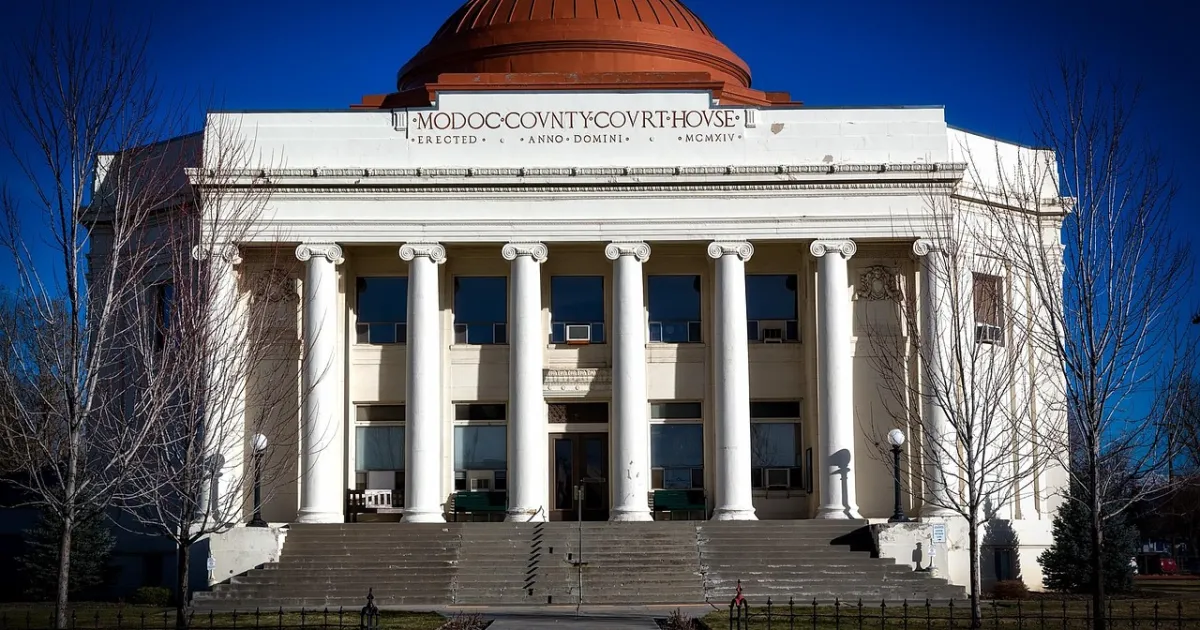
The separation of powers is the principle that the three main functions of the state should be held by different bodies: making the law (the legislature), running the government and carrying out the law (the executive), and deciding disputes about the law (the judiciary). The aim is to stop any one person or group from holding all power. The United States applies the principle strictly. The UK applies it only in part: its judges are independent, but its government sits inside Parliament.
Montesquieu's idea
The idea is most closely linked with the French writer Montesquieu, whose book The Spirit of Laws appeared in 1748. He described a distribution of power between a legislature, an executive and a judiciary, though he did not use the phrase "separation of powers" himself. He drew on the Roman Republic and on the British constitution of his day.
His central argument was about liberty. If the same person or body both makes the laws and enforces them, it can pass tyrannical laws and then apply them. Each power should exercise only its own functions. He also argued that the branches need separate sources of authority: if the legislature appoints the executive and the judges, it can also dismiss them, and the separation is lost.
Montesquieu was not the first to think along these lines. John Locke's Two Treatises of Government (1690) distinguished legislative, executive and "federative" (foreign affairs) power, while treating the legislature as supreme. A related but separate idea is checks and balances: each branch can limit the others, and each has enough independence to defend its own powers.
The three branches
| Branch | Main function | In the UK | In the US |
|---|---|---|---|
| Legislature | Makes and changes the law; scrutinises government | Parliament: House of Commons and House of Lords | Congress: House of Representatives and Senate |
| Executive | Runs the government and carries out the law | Prime minister, Cabinet and other ministers | The president and executive officers |
| Judiciary | Interprets the law and decides cases | The courts, with the Supreme Court at the top | Federal courts, with the Supreme Court at the top |
The US model
The US Constitution of 1787 divides the federal government into three branches and pairs that division with checks and balances. Its framework draws on Montesquieu.
- Congress makes the laws and controls taxes, budgets and declarations of war. It can impeach officials and override a presidential veto.
- The president enforces the laws, is commander-in-chief, can veto bills, grants pardons and appoints senior officials with the consent of the Senate.
- The federal courts decide cases. Judges serve "during good behaviour" and their pay cannot be cut. Since Marbury v Madison (1803), courts have been able to strike down laws they find unconstitutional.
The separation is also personal. The Constitution bars officials of the executive and judicial branches from sitting in Congress at the same time, so a US cabinet member cannot also be a member of the House or Senate. Our explainer on parliamentary and presidential systems looks at how this shapes the way governments are formed and removed.
Why the UK has only a partial separation
In the UK the executive and the legislature are closely joined. In the 19th century Walter Bagehot described a "nearly complete fusion" of the two.
The fusion of executive and legislature
- Ministers sit in Parliament. By convention, ministers are members of one of the two Houses, most of them in the Commons.
- The law limits their number. Under the House of Commons Disqualification Act 1975, no more than 95 holders of ministerial office may sit and vote in the Commons at one time.
- The government depends on Parliament. A government stays in office only while it keeps the confidence of the Commons, which can remove it through a vote of no confidence.
- The government usually controls Parliament's agenda. With a working majority and party discipline, government bills nearly always pass.
The arguments
Critics say this gives a government with a large majority too much power. Lord Hailsham, a former Lord Chancellor, popularised the phrase "elective dictatorship" for this in a BBC lecture in 1976, and campaigners for a codified constitution have made similar arguments. Defenders reply that fusion lets a government with a clear majority carry out its programme and makes it obvious who is responsible, while Parliament can still question and remove it. The constitutional theorist A. V. Dicey was sceptical of the doctrine itself, calling the separation of powers "the offspring of a double misconception".
Where the UK does separate powers
The clearest separation is between the courts and the other two branches. No MP may hold a full-time judicial post. The courts can review whether the government has acted lawfully, but under parliamentary sovereignty they cannot declare an Act of Parliament invalid. Under the Human Rights Act 1998 they can issue a "declaration of incompatibility", which does not strike the law down and does not bind Parliament. Our explainer on the rule of law covers why judicial independence matters.
The Constitutional Reform Act 2005
Until the 2000s the overlap reached into the courts as well. The Lord Chancellor was at once a Cabinet minister, the head of the judiciary in England and Wales, and the Speaker of the House of Lords. The country's highest court of appeal was made up of judges known as the Law Lords, who sat as members of the House of Lords and so were also part of the legislature.
The Constitutional Reform Act 2005, which received royal assent on 24 March 2005, changed this in three main ways:
- it created a Supreme Court of the United Kingdom to take over the appeal work of the Law Lords;
- it reshaped the office of Lord Chancellor, who is no longer head of the judiciary or Speaker of the Lords (a new office of Lord Speaker took over that role);
- it set up the Judicial Appointments Commission to select judges for the courts of England and Wales.
Section 3 of the Act also places a duty on the Lord Chancellor and other ministers to uphold the continued independence of the judiciary. Ministers must not try to influence particular judicial decisions through special access to judges.
The Supreme Court since 2009
The Supreme Court opened on 1 October 2009 in the Middlesex Guildhall building in London. The Act provides for 12 judges. Since then the most senior judges have no longer sat in the House of Lords, which ended the dual role of the Law Lords.
The UK still does not have a strict separation of powers on the American model. Ministers remain in Parliament and the government still depends on its confidence. But since 2009 the top court has been institutionally separate from the legislature, and the judiciary is the branch most clearly set apart from the other two.
Common questions
Does the UK have a separation of powers?
Partly. The judiciary is independent, especially since the Constitutional Reform Act 2005 and the opening of the Supreme Court in 2009. But the executive and legislature are fused: ministers sit in Parliament and the government depends on the confidence of the Commons.
Who came up with the separation of powers?
The idea is most associated with Montesquieu's The Spirit of Laws (1748). Earlier writers, including John Locke in 1690, had also distinguished different kinds of state power.
What are the three branches of government in the UK?
The legislature (Parliament), the executive (the prime minister, Cabinet and ministers) and the judiciary (the courts, headed by the Supreme Court).
Why was the UK Supreme Court created?
To separate the country's highest court from Parliament. Before 2009, the top judges sat as Law Lords in the House of Lords, which is part of the legislature.
Sources
- Wikipedia: Separation of powers
- Wikipedia: Separation of powers in the United Kingdom
- Wikipedia: Constitutional Reform Act 2005
- legislation.gov.uk: Constitutional Reform Act 2005, section 3
- legislation.gov.uk: House of Commons Disqualification Act 1975, section 2
- Wikipedia: Separation of powers under the United States Constitution
The Ballot Primer is independent and non-partisan. Spotted an error? Tell us.
Keep reading

What Is a Select Committee? How Parliament Scrutinises Government
Select committees are where MPs and peers question ministers, officials and experts in detail. Here is how they are set up, who s…
9 November 2026
What Is a Vote of No Confidence? How It Works in the UK
A government stays in office only while it has the confidence of the House of Commons. Here is how a no confidence vote works, ho…
9 November 2026
Parliamentary vs Presidential System: How They Differ
Whether a country's leader answers to parliament or is elected separately for a fixed term shapes almost everything about how it …
9 November 2026