Home › Rights & the Constitution
What Is the Rule of Law? Meaning, Principles and Examples
The rule of law is the idea that everyone, including the government, must obey the law, and that laws must be public, clear and applied equally by independent courts. Here is what it means and how it works in practice.
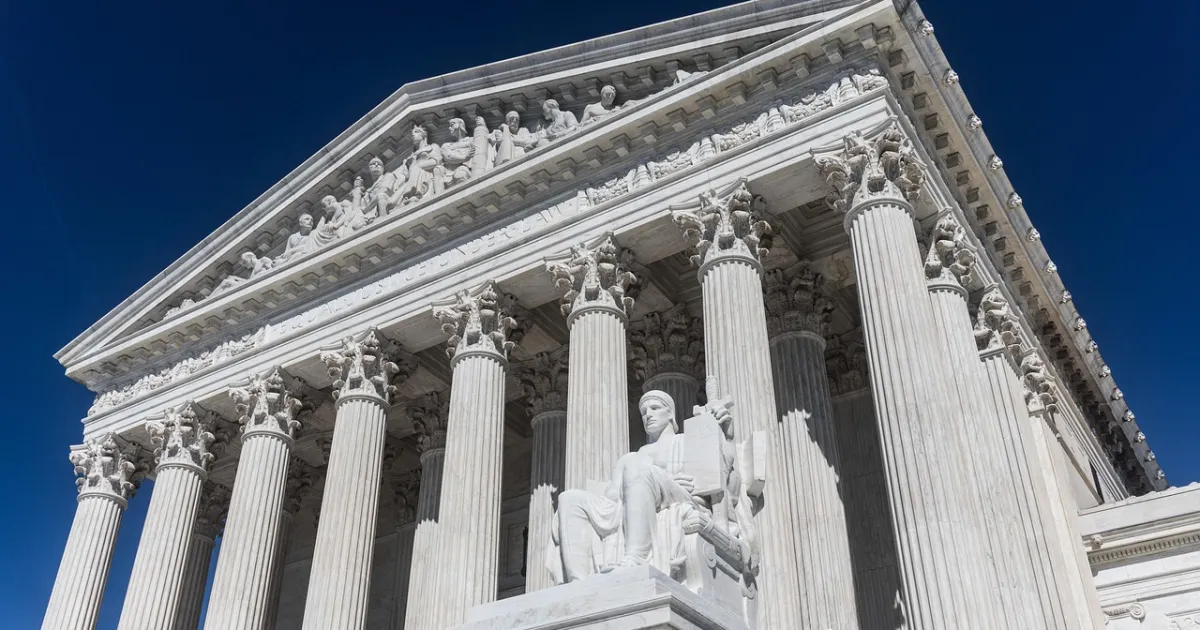
The rule of law is the principle that everyone in a country, including the government and its officials, is bound by the law. The laws themselves must be made public, apply equally to all, and be enforced by courts that are independent of the people in power. Its opposite is rule by the arbitrary will of whoever holds power.
That short definition hides a long debate. Lawyers and philosophers agree on the core but disagree about how much else the idea should include.
A working definition
The United Nations describes the rule of law as a principle of governance under which "all persons, institutions and entities, public and private, including the State itself" are accountable to laws that are publicly promulgated, equally enforced and independently adjudicated, and that are consistent with international human rights norms and standards.
In the UK, the most quoted modern definition comes from the senior judge Lord Bingham. In a 2006 lecture he suggested that the core of the principle is that all persons and authorities within the state, whether public or private, should be bound by and entitled to the benefit of laws that are made public, take effect for the future and are publicly administered in the courts. He developed the idea in his 2010 book, The Rule of Law, summarised in our guide to Lord Bingham's eight principles.
The core elements
Different definitions group the ideas differently, but most include the following:
- The law is supreme. Government may act only within powers given to it by law, and cannot simply do what it likes.
- Equality before the law. The same law applies to ministers, officials and ordinary citizens.
- Clear and public laws. People must be able to find out what the law is and plan their lives around it.
- Independent courts. Disputes, including disputes with the state, are decided by judges who are not under government control.
- Fair procedures and access to justice. People can take a case to court and get a fair hearing without prohibitive cost or delay.
- Accountability. When officials break the law, they can be held to account like anyone else.
The World Justice Project, an organisation that studies the rule of law worldwide, condenses these into four universal principles:
| Principle | What it means |
|---|---|
| Accountability | Government and private actors are accountable under the law. |
| Just law | The law is clear, publicised and stable, and is applied evenly. |
| Open government | The processes by which law is adopted, administered, adjudicated and enforced are accessible, fair and efficient. |
| Accessible and impartial justice | Justice is delivered in good time by competent, ethical and independent representatives and neutrals. |
Thin and thick versions
The main disagreement is about whether the rule of law is only about the form of laws or also about their content.
- Formal ("thin") view. The philosopher Joseph Raz argued that the rule of law should be limited to formal qualities, such as laws being open and relatively stable. On this view the rule of law is not the same as democracy or justice, and even a non-democratic state could in principle meet it.
- Substantive ("thick") view. Others, such as the legal scholar Trevor Allan, see the rule of law as protecting individual rights, including against the legislature. Lord Bingham's list also includes the protection of fundamental human rights.
Both sides accept the risk on the other side: a thin definition may allow unjust laws to count as the rule of law, while a very thick one, as Allan himself accepted, risks turning the concept into a complete social philosophy.
The rule of law in the UK
The UK has no single codified constitution, so the rule of law rests on court decisions, statute and constitutional convention. The classic account is that of A. V. Dicey in 1885, explained in our guide to Dicey's three meanings of the rule of law.
Parliament recognised the principle in statute in the Constitutional Reform Act 2005. Section 1 is headed "The rule of law" and states that the Act does not adversely affect "the existing constitutional principle of the rule of law" or the Lord Chancellor's existing constitutional role in relation to that principle. The Act does not define the term. Under the same Act, the Lord Chancellor's oath of office includes a promise to "respect the rule of law" and to defend the independence of the judiciary.
The UK principle also coexists with parliamentary sovereignty. Courts cannot strike down an Act of Parliament, but they can review whether ministers and public bodies have acted within the powers that Parliament gave them.
Rule of law examples
The government needs legal authority: Entick v Carrington (1765)
In 1762 King's messengers searched the home of the writer John Entick under a warrant issued by Lord Halifax and took away his papers. Entick sued for trespass. The court held that there was no authority in statute or precedent for such a warrant, so Entick won. The case is still cited for the rule that the state may interfere with people's property only where the law allows it.
Ministers must obey the courts: M v Home Office (1993)
A teacher from Zaire was removed from the UK even though a judge believed the Home Office had undertaken not to deport him before a fuller hearing, and a later court order to bring him back was not properly acted on. The House of Lords held that the Home Office was in contempt of court and that court orders can be enforced against a minister acting in an official capacity.
Judicial review of public decisions
Judicial review lets people challenge decisions by public bodies in court. In a 1985 case, Lord Diplock summarised the main grounds as illegality, irrationality and procedural impropriety. If a court finds a decision unlawful, it can set it aside.
Access to justice: R (UNISON) v Lord Chancellor (2017)
On 26 July 2017 the UK Supreme Court unanimously ruled that fees for bringing claims to employment tribunals were unlawful because they prevented people from getting access to justice.
These cases show the principle at work in ordinary disputes as well as in high politics. It also supports the separation of powers, since independent courts check the executive.
Common questions
What is the rule of law in simple terms?
It means that everyone, including the government, has to follow the law, and that laws must be public, clear and applied equally by independent courts. No one is above the law.
Is the rule of law written down in the UK?
Not as a full definition. Section 1 of the Constitutional Reform Act 2005 recognises "the existing constitutional principle of the rule of law", but the detail comes from court decisions and legal writing.
What is an example of the rule of law?
A court ruling against the government is a classic example. In 2017 the UK Supreme Court struck down employment tribunal fees because they blocked access to justice.
Who defined the rule of law?
No single person. A. V. Dicey's 1885 account and Lord Bingham's 2010 book are the best-known UK definitions, and the United Nations has its own definition.
Sources
The Ballot Primer is independent and non-partisan. Spotted an error? Tell us.
Keep reading

When Did Women Get the Right to Vote in the UK?
Women in the UK first voted in a general election in 1918, but only if they were over 30 and met a property test. Equal voting ri…
9 November 2026

The Rule of Law as a British Value: What Schools Teach
Since 2014, schools in England have been expected to promote four fundamental British values, one of which is the rule of law. He…
9 November 2026

Dicey and the Rule of Law: The Three Meanings Explained
The Victorian lawyer A. V. Dicey gave the rule of law its classic British definition in 1885. Here are his three meanings in plai…
9 November 2026