The Pan-African Parliament: What It Is, Who Sits in It and What It Can Do
The Pan-African Parliament is the African Union's continental assembly. Its members come from national parliaments and its powers are mainly consultative, though a 2014 protocol would give it a law-making role.
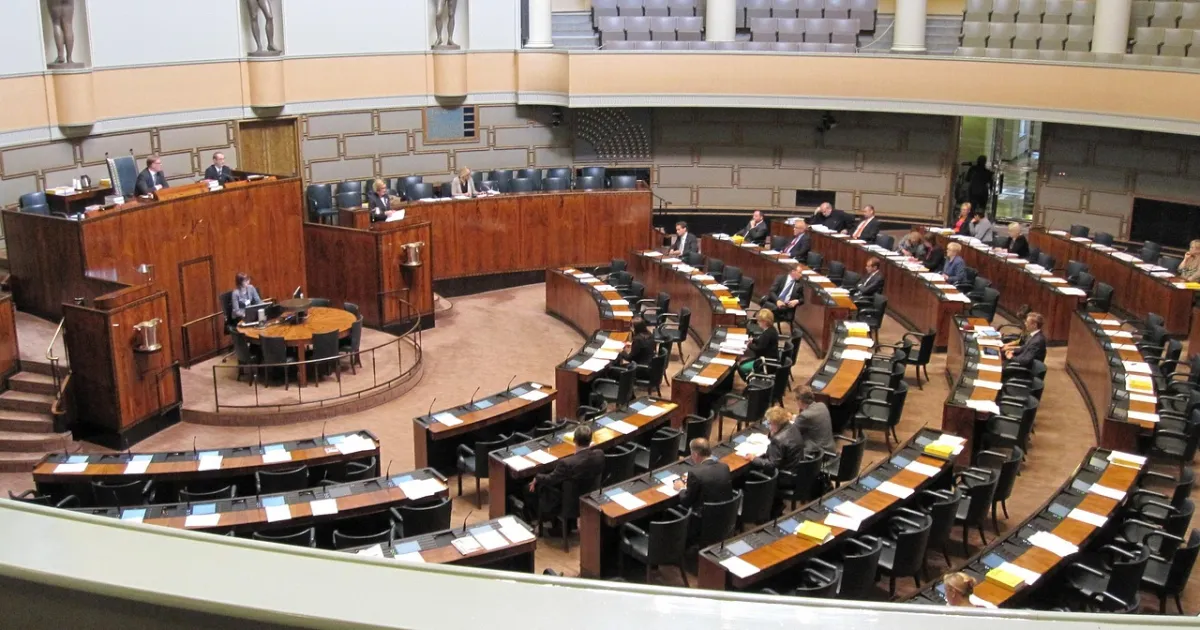
The Pan-African Parliament (PAP) is the parliamentary body of the African Union. It was established in March 2004 and has its seat in Midrand, South Africa. Its members are not directly elected: each national parliament of a participating member state sends five of its own members. The PAP's powers are mainly consultative and advisory. It debates, scrutinises and makes recommendations, but it cannot pass laws that bind member states. A 2014 protocol that would give it legislative powers has not yet gained enough ratifications to take effect.
Why the Pan-African Parliament was created
Article 17 of the AU's Constitutive Act provides for a Pan-African Parliament "in order to ensure the full participation of African peoples in the development and economic integration of the continent". It leaves the details of its composition, powers and organisation to a separate protocol. The idea is older than the AU: the Parliament was one of the organs foreseen in the 1991 Abuja Treaty establishing the African Economic Community.
The PAP describes its purpose as giving African peoples and their grassroots organisations a common platform to take part in discussion of the continent's problems. Its stated long-term aim is to become an institution with full legislative powers, whose members are elected by universal adult suffrage.
Who sits in it
Under Article 4 of the establishing protocol, each national parliament is represented by five members, at least one of whom must be a woman. The delegation is supposed to reflect the range of political opinion in that national parliament.
Members are elected or designated by their national parliaments, so a member of the PAP is first of all a member of a national legislature. The PAP's website says that the protocol establishing the Parliament has been ratified by 49 AU member states.
| Feature | How it works |
|---|---|
| Seat | Midrand, South Africa |
| Established | March 2004 |
| Members per state | Five, at least one a woman |
| How chosen | Elected or designated by national parliaments |
| Powers | Consultative and advisory |
| Working languages | Arabic, English, French and Portuguese |
What powers it has
Article 11 of the establishing protocol lists the PAP's functions. They include:
- examining, discussing or giving opinions on any matter, including human rights, democracy, good governance and the rule of law;
- discussing its own budget and the budget of the Community, and making recommendations on them before they are approved;
- working towards the harmonisation and co-ordination of member states' laws;
- promoting the AU's programmes and helping co-ordinate policy with the Regional Economic Communities;
- adopting its own Rules of Procedure and electing its own President.
The common thread is that the PAP advises rather than decides. Its plenary makes recommendations for the attention of the heads of state and government, and the decisions rest with the AU Assembly.
How it differs from a national parliament
- Membership. National parliaments are usually elected by voters. PAP members are chosen by national parliaments from among their own members.
- Law-making. A national parliament passes laws that bind the country. The PAP can examine, debate and give opinions, but it cannot make binding laws for member states.
- Money. A national parliament normally approves the budget. The PAP discusses the AU budget and makes recommendations before it is approved, but under the Constitutive Act the budget is adopted by the AU Assembly.
- Final say. The AU's supreme organ is the Assembly of heads of state and government, not the Parliament.
How it is organised
The Plenary
The Plenary is the full body of members. It considers reports from committees and adopts recommendations. Ordinary sessions of up to a month are held up to twice a year, and extraordinary sessions can be called when needed.
The Bureau
The Bureau is the PAP's leadership: a President and four Vice-Presidents. Its members represent the five regions of the continent.
Committees and caucuses
Detailed work is done in permanent committees, each covering a policy area, which report to the Plenary. Members also meet in caucuses, each with its own bureau of a chairperson, deputy chairperson and rapporteur.
The Secretariat
A Secretariat of staff supports the Parliament's work in Midrand.
The Malabo Protocol: towards law-making powers
On 27 June 2014, at its summit in Malabo, Equatorial Guinea, the AU Assembly adopted a new Protocol to the Constitutive Act relating to the Pan-African Parliament, usually called the Malabo Protocol. It would turn the PAP into what the Parliament calls a "fully-fledged legislative body".
The protocol needs ratification by at least 28 member states before it comes into force. As of October 2024, the PAP reported that 15 countries had ratified it. Until the threshold is reached, the PAP continues to work under its original protocol, with advisory powers only.
The Parliament and its supporters present the protocol as the next step towards a body with real influence over AU policy. Ratification, however, is a decision for each government under its own constitutional procedures, and the PAP has itself named the slow pace of ratification and domestication of its protocols as a challenge.
How the PAP fits into the African Union
The PAP is one of the AU's organs, alongside the Assembly, the Executive Council, the Commission and the Peace and Security Council. The AU groups it with the Economic, Social and Cultural Council as a body for participation, rather than decision-making. For the wider structure, see what the African Union is.
Because its mandate covers democracy, good governance and human rights, the PAP also takes an interest in elections: the African Charter on Democracy, Elections and Governance names it among the institutions from which AU election observers can be drawn, and as one of the organs involved in evaluating how the Charter is implemented.
Common questions
Where is the Pan-African Parliament based?
In Midrand, South Africa. It was established in March 2004.
How are members of the Pan-African Parliament chosen?
They are elected or designated by the national parliaments of member states. Each national parliament sends five members, at least one of whom must be a woman, and the group should reflect the political range of that parliament.
Can the Pan-African Parliament make laws?
Not at present. Its powers are consultative and advisory. The 2014 Malabo Protocol would give it legislative powers, but it needs 28 ratifications to take effect and had 15 as of October 2024.
Are Pan-African Parliament members directly elected?
No. They are members of national parliaments chosen by those parliaments. The PAP's stated long-term aim is for members to be elected by universal adult suffrage.
Sources
The Ballot Primer is independent and non-partisan. Spotted an error? Tell us.
Keep reading
What Is the African Union? History, Aims, Organs and Members
The African Union brings together the states of Africa in one continental organisation. Here is where it came from, what its foun…
9 November 2026
What Is SADC? The Southern African Development Community Explained
SADC links 16 countries of southern Africa in a community for development, trade and security co-operation. Here is how it began,…
9 November 2026

How Election Observation Works: Observers, Missions and Reports
Election observers watch the whole electoral process, not just polling day, and report on how far it met agreed standards. Here i…
9 November 2026