What Political Party Am I? Working Out Where You Fit in UK Politics
No single test tells you which UK party you belong to. This explainer covers the left–right spectrum, the two-axis compass, how quizzes score you and how to compare party positions yourself.
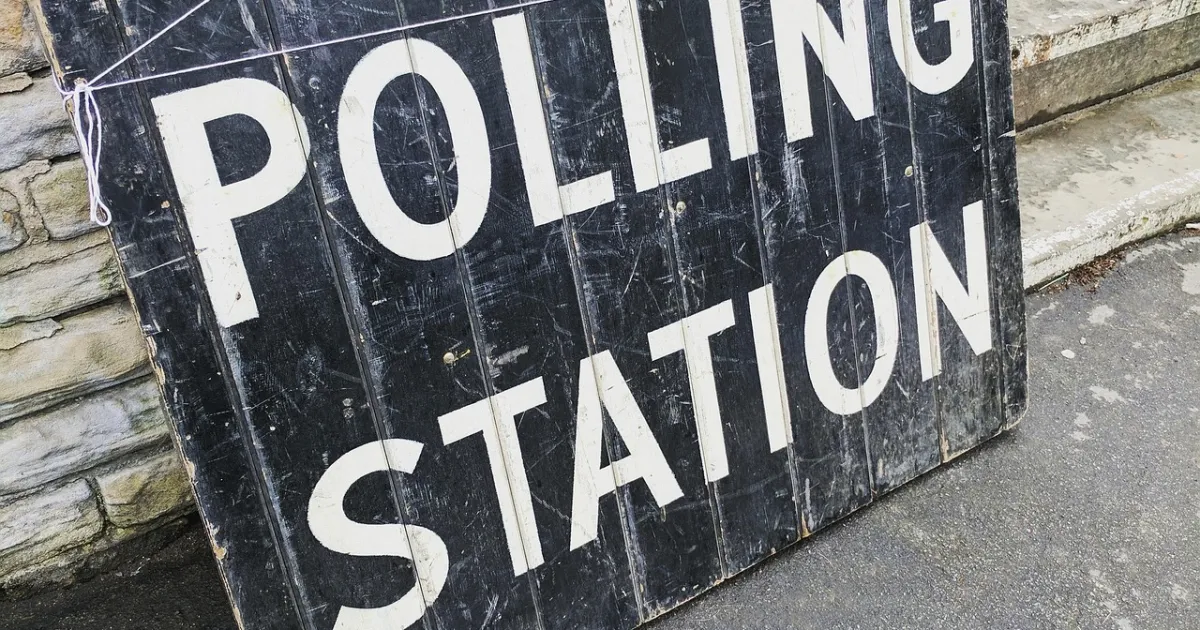
If you are asking "what political party am I" in the UK, no single label or test gives a definitive answer. The usual starting point is the left–right political spectrum, which roughly sorts parties and voters by views on equality, hierarchy and the economy. A party is a match when its policies line up with the issues you care about most, and most people's views do not sit neatly at one end. The sections below explain how the spectrum maps onto UK parties, why many analysts add a second axis, how online quizzes score you, and how to check a party's positions for yourself.
The UK political party spectrum
On the left–right model, left-wing politics generally favours sharing political power and stresses ideas such as equality, rights, reform and internationalism. Right-wing politics generally favours the concentration of power and stresses authority, order, duty, tradition and nationalism. Between them sit centrist and moderate positions that are not strongly aligned with either end.
In economic terms, left-wing positions are usually linked to redistributing wealth, higher taxes on wealthy individuals, stronger business regulation and public spending on social infrastructure. Right-wing positions are usually linked to lower taxes, limits on government spending, fewer restrictions on business and free trade.
The site Voting Counts gives a commonly used placement of the main UK parties:
| Position on the spectrum | Parties commonly placed there |
|---|---|
| Left-wing | Labour, the Green Party, the Scottish National Party (SNP) |
| Centre / moderate | Liberal Democrats |
| Right-wing | Conservatives, Democratic Unionist Party (DUP) |
Treat the table as shorthand. The same source stresses that parties have shifted position over their histories, and that each party contains a range of views, which is why a politician may be described as being to the left or right of their own party. The summary does not cover every party that stands for election in the UK. For what parties are and how they are registered, see what a political party is and how UK rules work.
Why one line is often not enough
A single left–right line has a well-known weakness. It mixes economic questions with social ones, so a person who wants high public spending and strict limits on personal behaviour has nowhere obvious to go. Critics have described single-axis models as too simple, arguing that the left–right divide mainly captures economics and need not reflect someone's social views.
Two-axis maps split politics into two separate questions:
- who should control the economy, shown on a horizontal axis from economic left (more collective control and redistribution) to economic right (private property, markets, lighter regulation);
- how much authority the state or society should have over personal life, shown on a vertical axis from authoritarian (order, security, tradition) to libertarian (individual liberty, civil rights, suspicion of concentrated power).
That produces four quadrants: authoritarian left, authoritarian right, libertarian left and libertarian right, with centrists near the middle of both axes. "Libertarian" here is a direction on the map, not a particular party. The idea is older than the internet. The British psychologist Hans Eysenck proposed a two-dimensional model in the 1950s, and David Nolan drew a chart with economic freedom on one axis and personal freedom on the other in 1969, publishing it in 1971.
Some movements still fit awkwardly. Regionalism and Christian democracy do not map precisely onto left and right, populism has both left-wing and right-wing forms, and green politics, though generally seen as left, also has conservative strands.
How "which political party am I" quizzes work
Most online tests that promise to answer "which political party am I" in the UK follow the same pattern. You rate a list of statements from strongly disagree to strongly agree, and your answers are converted into scores on one or more axes. The best-known, The Political Compass, used 62 statements according to one account of its history. Sources differ on when it started: The Decision Lab dates its popularisation to 2000, while the site itself gives 2001 as its starting point. Other tests use different designs. One, for example, uses 48 statements on a 7-point scale and labels anyone within 15 points of the centre on both axes as centrist.
These tools have recognised limits:
- Some do not explain clearly how answers are turned into a position, which makes results hard to check.
- Wording matters. A statement about "protecting national culture" and one about "restricting immigration" may target a similar idea but draw different answers.
- Averaging many answers can pull people with strong but mixed views towards the middle.
- A frequent complaint is that a large share of takers end up in the libertarian left quadrant, further left and more libertarian than they expected.
- Terms travel badly between countries. In much of Europe "liberal" often means pro-market, while in the US it usually means centre-left, so a quiz written for one country may misread views in another.
A quiz result is best read as a rough sketch of your leanings. Comparing results from more than one tool shows how much the design affects the answer.
Working it out issue by issue
Research summarised by Voting Counts suggests that labels can mislead even people who use them about themselves. In a YouGov study published on 14 August 2019, more than 100 political views were put to the public, and many people struggled to identify any of them as specifically left-wing or right-wing. People who described themselves as left or right also often held views associated with the other side. Among self-described right-wingers, 60% thought the House of Lords should be mostly or entirely elected, usually seen as a left-wing position. Among self-described left-wingers, 59% wanted stricter school discipline, usually seen as a right-wing one.
Because of this, Voting Counts suggests reading party manifestos and checking whether a party's positions match the issues you consider most important. A practical way to do that:
- List the five or six issues you care about most, such as tax, public services, housing, the environment, policing or constitutional reform.
- Write down your own view on each before looking at any party material.
- Compare those views with what each party's manifesto actually proposes, rather than with its reputation or its place on a chart.
- Decide which issues matter most to you if no party matches on everything.
Why party positions change over time
Where a party sits on the spectrum is not fixed. Parties tend to keep values present at their founding but also adapt for practical reasons, which can make them look more alike. Voting Counts cites the movement of the Labour Party further to the left after its 2015 leadership election as one of the most referenced recent shifts. The labels themselves move as well: classical liberalism was seen as leftist when its ideas first appeared, but in most countries it is now thought of as right-wing.
For this reason, a placement from a few years ago, or a quiz built around an earlier election, may no longer match a party's current programme. Party colours are another kind of shorthand; the history behind them is covered in why UK political parties have colours.
Common questions
Are political party quizzes accurate?
They give a rough indication rather than a precise measurement. Results depend on how statements are worded and how the test weights them, and some tests do not publish their method. Taking more than one test and comparing the outcomes gives a fairer picture.Which UK parties are left-wing and which are right-wing?
A common shorthand puts Labour, the Greens and the SNP on the left, the Liberal Democrats near the centre, and the Conservatives and the DUP on the right. These placements are generalisations, and parties have moved along the spectrum over the years.Can I be left-wing on some issues and right-wing on others?
Yes, and many people are. Survey research has found self-described left-wingers backing stricter school discipline and self-described right-wingers backing an elected House of Lords. Two-axis models were designed to show combinations of economic and social views that a single line hides.Where do the terms left and right come from?
They date from the French Revolution of 1789, when supporters of the king sat to the right of the president of the National Assembly and supporters of the revolution sat to the left. In British politics the terms came into common use in the late 1930s, during debates over the Spanish Civil War.Sources
The Ballot Primer is independent and non-partisan. Spotted an error? Tell us.
Keep reading

What Is Lobbying? Meaning, Rules and How It Works in Politics
Lobbying is the attempt to influence what governments and parliaments decide. Here is who does it, how it is regulated in the UK …
16 November 2026

Why Do UK Political Parties Have Colours? A Short History
Blue, red and yellow look like fixed facts of British politics, but for most of history party colours changed from town to town. …
9 November 2026

What Is a Political Party? What Parties Do and How UK Rules Work
Parties pick candidates, write programmes and organise both government and opposition. Here is what a political party is, how UK …
9 November 2026