Why Do UK Political Parties Have Colours? A Short History
Blue, red and yellow look like fixed facts of British politics, but for most of history party colours changed from town to town. Here is where they came from and why parties still use them.
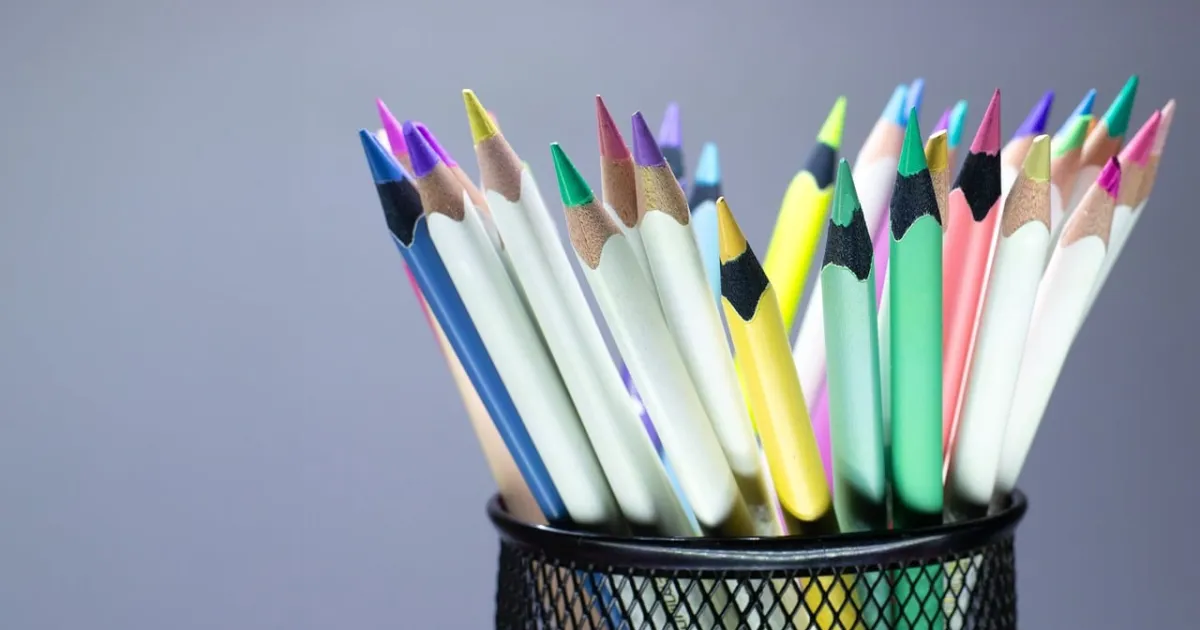
UK political parties use colours as a quick visual signal. A colour lets a voter recognise a party at a glance on a rosette, a poster, a leaflet or a results graphic, before reading a word. The national pattern most people know today, with the Conservatives in blue, Labour in red and the Liberal Democrats in yellow, is fairly recent. Until well into the 20th century, political party colours in the UK were set locally and could be different from one constituency to the next.
Where party colours came from
Colours were useful long before mass democracy. Elections were held before most people could read, and before the secret ballot and the printed ballot paper. Giving candidates a distinguishing rosette or ribbon helped voters and supporters tell rival sides apart. The phrase "political colours" entered the language as a way of describing someone's allegiance.
The oldest associations are disputed. One writer has traced red and blue to the Exclusion Crisis of 1679 to 1681, when red was linked to supporters of the Crown, the Tories, and blue to the Whigs. Yet William Hogarth's painting The Polling, which depicts an election of 1754, shows a blue flag for the Tories and a buff flag for the Whigs. Buff and blue are recorded as Whig colours from the early 18th century, and they were still in use around the time of the Reform Act of 1832.
In many places colours had nothing to do with national politics at all. They came from local coats of arms, or from the racing colours of the aristocratic families who dominated elections in a county or borough.
A patchwork of local colours
Because colours were local, the same party could look completely different a few miles away. Some recorded examples:
| Place | Period | Colours used |
|---|---|---|
| Birmingham, Whitby, East Worcestershire | 18th and 19th centuries | Tories in orange, pink and red respectively |
| Kendal, Marlborough, Wakefield | 18th and 19th centuries | Whigs in blue, purple and orange respectively |
| Greenwich | 1874 general election | The Liberal candidate in blue; his Conservative opponents in crimson |
| Walsall | 1960s | Tory red, Liberal blue, Labour yellow |
| Many parts of Wales | Traditional | Conservatives in red |
| North East England | Traditional | Conservatives red, Labour green, Liberals blue and orange |
| Scotland | Traditional | Liberals red and yellow (from the Lion Rampant); Tories blue and white (from the Saltire) |
Even within one party the variety was striking. Liberal colours included green across much of the Home Counties and Greater London in the late 1950s, red in parts of north-west England in the 1960s and yellow in Yorkshire. In 1964 The Times reported that a Manchester supplier of rosettes was stocking eight different colours or colour combinations to meet Liberal demand around the country.
How the national colours settled
Conservative blue
Blue became steadily more common for the Conservatives over the 20th century, and the choice was reinforced by a decision of the party's Central Council in 1949. Blue is now associated with centre-right parties in many countries, an association that is often traced to its use by the Tories in Britain.
Labour red
Red has long been the colour of the labour movement, in the UK and in countries such as Australia, New Zealand and Ireland. The Labour Party's traditional anthem, "The Red Flag", refers to it directly. In places where another party already used red, local Labour parties sometimes chose other colours, such as yellow.
Liberal orange, then yellow
The Liberals had no national colour until the late 1960s. In the 1960s party headquarters encouraged local parties to use orange, which advertising professionals considered the colour that stood out most, especially in fluorescent "dayglo" form on posters. The party's publications department printed its material in orange, and by the general election of February 1974 Liberals were being encouraged to adopt it for national recognition. Even so, it is doubtful there was ever a formal central decision, and some local parties held on to their traditional colours for years. Yellow as a political colour in Britain has been traced to a Liberal publication of the 1920s, Britain's Industrial Future. Today yellow is used by the Liberal Democrats, the Scottish National Party and the Alliance Party of Northern Ireland, which has used yellow and black since it was formed in 1970.
Other parties
Plaid Cymru uses green and yellow, taken from the daffodil. In Northern Ireland, unionist and nationalist parties in the Assembly are often described as the "orange" and "green" blocs. Reform UK uses teal, which is seen as a variant of conservative blue. For what a party is and how it organises, see our explainer on what a political party is.
Why colours still matter
Recognition on the ballot paper
Colour was first a tool for telling candidates apart, and recognition is still the point. The Registration of Political Parties Act 1998 set up a register of party names and, because it allowed logos on ballot papers, a register of emblems too. Under the Political Parties, Elections and Referendums Act 2000, a party can register up to three emblems for use on ballot papers. The rules deal with names and emblems rather than colours, but in practice the two go together: a party's symbol and its literature carry the same national colour. One history of party colours names the use of logos on ballot papers as one of the forces behind national uniformity. Registering a name and emblem is part of starting a political party in the UK.
Branding
Modern campaigns aim for the same themes, logos and colours across the whole country, with approved variations for nations, regions and localities. Mass media encouraged this: a single colour per party simplifies the message. Politicians still show their colour on rosettes, ties and ribbons at public appearances.
Television and election maps
Television accelerated the change. A former Liberal MP has suggested that the arrival of colour television in 1967 was a principal driver towards national uniformity of Liberal colours.
The United States shows how strongly television can fix a colour scheme. There, red for Republicans and blue for Democrats only became settled around the 2000 presidential election, when the result took time to settle and the networks' electoral maps stayed on screen; as late as the 1990s Democrats were often shown in red. That is the opposite of the usual convention elsewhere, where red is linked with parties of the left. Outlets such as the BBC follow the American scheme when they cover US elections.
Colours still change and still vary
The national palette is a convention, not a law, and it has kept moving. The Liberal tradition went from many local colours to orange and then to yellow. Newer parties choose colours to place themselves in relation to older ones. Local traditions have not disappeared either: in Penrith and the Border the traditional Conservative colour was yellow, and at the 2010 general election Conservative candidates there and in Westmorland and Lonsdale wore blue and yellow rosettes.
So when you see a sea of one colour on election night, it reflects decades of standardisation for voters, printers and cameras, not a fixed rule that has always applied.
Common questions
Why is the Conservative Party blue?
Blue became increasingly common for the Conservatives during the 20th century and was reinforced by a decision of the party's Central Council in 1949. Earlier, Tories used many colours, including red, orange and pink in different places.
Why is Labour red?
Red is the traditional colour of the labour movement in Britain and several other countries, and Labour's anthem is "The Red Flag". Locally, Labour sometimes used other colours, such as yellow or green.
What colour are the Liberal Democrats?
Yellow, which they share with the SNP and the Alliance Party of Northern Ireland. Their Liberal predecessors used many local colours and moved towards orange from the 1960s.
Do party colours appear on the ballot paper?
The rules on ballot papers deal with party names and emblems. A registered party can register up to three emblems for use on ballot papers. Colours themselves are a matter of party branding rather than law.
Sources
The Ballot Primer is independent and non-partisan. Spotted an error? Tell us.
Keep reading

What Is a Political Party? What Parties Do and How UK Rules Work
Parties pick candidates, write programmes and organise both government and opposition. Here is what a political party is, how UK …
9 November 2026
What Is a Party Whip? Chief Whips, Three-Line Whips and Free Votes
Whips keep MPs voting with their party. Here is what the Chief Whip does, what one-, two- and three-line whips mean, when MPs get…
9 November 2026

What Is a Minority Government? How It Survives, With Examples
A minority government runs the country without a majority in parliament. Here is how it survives from vote to vote, what happened…
9 November 2026