What Is Democracy? Meaning, Types and Why It Matters
Democracy is government in which power rests with the people, exercised directly or through elected representatives. This guide covers the origin of the word, the main types and the arguments for and against.
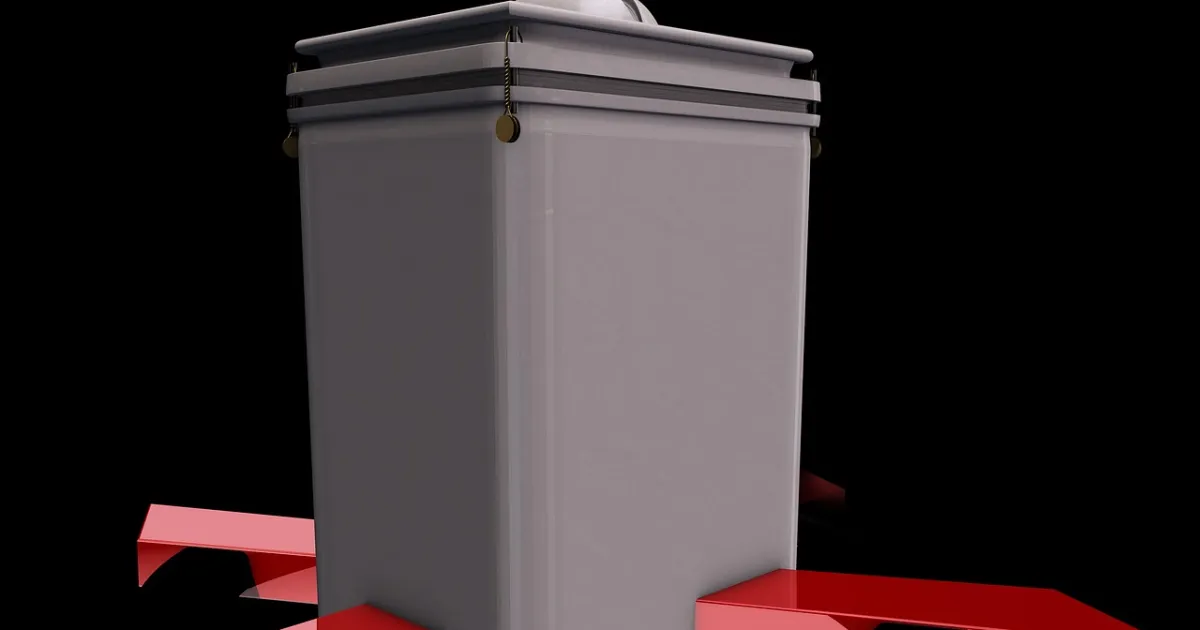
Democracy is a form of government in which political power rests with the people. They use it either by deciding questions themselves or, far more often today, by electing others to decide for them. A UNESCO glossary entry defines it as a system of governance in which power resides with the people, who take part in decisions, typically by voting. A narrow use of the word asks only that rulers are chosen in competitive elections. A broader one adds guarantees of civil liberties and human rights.
Where the word comes from
The word is Greek. Dēmokratía joins dēmos, the people, and krátos, rule or power. It appeared in the Greek city-states of the fifth century BC, above all Athens, and meant rule of the people, set against aristocracy, rule of an elite. The reforms of Cleisthenes in 508–507 BC are usually taken as the starting point of the Athenian system.
Athens practised democracy in its most direct form. Laws were made by an assembly that any adult male citizen could attend, speak in and vote in, and many public offices were filled by lot instead of election. The citizen body was narrow all the same. Women, slaves and resident foreigners were shut out, and adult male citizens probably made up no more than 30 per cent of the adult population.
The pattern recurred. In almost every democratic state, citizenship began with a limited class and was widened by degrees, in most modern democracies through the suffrage movements of the nineteenth and twentieth centuries.
What counts as a democracy
There is no single agreed definition. The Stanford Encyclopedia of Philosophy describes democracy as a method of making collective decisions in which the participants are equals at an essential stage of the process. That equality can be thin, such as one person, one vote in an election for a parliament, or it can run deeper and extend to the debate and coalition building that come before a vote.
Lists of democratic features usually include competitive elections, freedom of speech, assembly and association, equality before the law and decision by majority. Because a majority can overrule everyone else, most accounts add protections for minorities and individuals.
Researchers who compare countries need firmer categories. One widely used scheme, Regimes of the World, published by the Varieties of Democracy project and used by Our World in Data, sorts political systems into four groups.
| Type | What defines it |
|---|---|
| Closed autocracy | Citizens have no right to choose their political leaders through elections |
| Electoral autocracy | Leaders are chosen in elections, but citizens lack the freedoms that would make those elections free and fair |
| Electoral democracy | Citizens choose the chief executive and the legislature in meaningful, free and fair, multi-party elections |
| Liberal democracy | An electoral democracy in which citizens also have individual and minority rights, are equal before the law, and the executive is constrained by the legislature and the courts |
Other indices draw the lines differently and sometimes classify the same country in another way.
The main types
The oldest distinction is between direct democracy, where citizens vote on laws and policies themselves, and representative democracy, where they elect people to do so. The two are compared in detail in direct vs representative democracy. Representative democracy is the dominant form today.
Representative systems differ in how the government is chosen. In a parliamentary democracy the government is appointed by, or can be dismissed by, the elected representatives. In a presidential democracy the president is both head of state and head of government and is chosen by the voters or another body, not by the legislature. The parliamentary and presidential systems are set out in their own guide.
A third label, liberal democracy, describes a representative system in which a constitution or the courts limit what a majority may do, usually by securing rights such as free speech and free association for everyone. A democracy does not have to be a republic. It can equally be a constitutional monarchy, as the United Kingdom is.
Why democracy matters
Arguments for democracy fall into two families. The first looks at results. John Stuart Mill argued in 1861 that because democracy gives every subject a share of political power, those who decide are forced to take account of a wider range of rights and interests than under aristocracy or monarchy. Writers since have pointed to the link between working democratic institutions and the protection of rights such as a fair trial and freedom of expression. The economist Amartya Sen made a narrower claim that is often cited: independent countries with democratic government and a relatively free press have not suffered major famines, because politicians who face free elections and a free press have a reason to respond to the needs of the poor.
The second family treats democracy as valuable in itself, whatever it produces. One version rests on liberty: people's lives are shaped by the laws and institutions around them, and only an equal voice and vote gives each person a share of control over that setting. Our World in Data puts the practical point simply: democracy gives citizens a say over decisions that shape their lives and a way to hold their leaders to account.
By that source's account the spread has been recent. In the late eighteenth century no country could meaningfully be called a democracy. Electoral and liberal democracy became common around the world during the twentieth century, and the Regimes of the World data now show countries split about evenly between democracies and autocracies. By 2025 about 1.6 billion people lived in electoral democracies and another 600 million in liberal democracies. Because the world's population grew faster than democracy spread, the number of people without democratic rights is nevertheless higher than ever.
Common criticisms
Objections to democracy are as old as the system. Plato held that it undermines the expertise good government needs: most people are not equipped to think well about hard political questions, yet politicians must win their approval, so the state ends up guided by those skilled at mass appeal. He preferred rule by philosopher-kings. Thomas Hobbes thought democracy inferior to monarchy because it breeds destabilising disagreement among subjects.
A second line of criticism is the tyranny of the majority. Where the majority decides and nothing protects individuals or groups, political minorities can be oppressed. The constitutional limits found in liberal democracies are the usual answer.
A third doubts the voter. Mill, for all his arguments in favour of democracy, proposed a scheme of plural voting in which every adult had at least one vote and the better educated had more. Those who reply to him argue that any test of expertise is likely to pick out a narrow section of society with biases of its own.
Defenders tend to concede the faults and compare the alternatives. Winston Churchill, speaking in the House of Commons on 11 November 1947, reported the saying that "democracy is the worst form of Government except all those other forms" that have been tried.
Democracy in the United Kingdom
The United Kingdom is a representative democracy of the parliamentary kind and the country in which the Westminster system originated. Its governing principle is parliamentary sovereignty, combined with an independent judiciary, and its head of state is a monarch who does not rule. Voters elect the House of Commons, and the right to vote was extended in stages over the nineteenth and twentieth centuries.
Common questions
What does democracy literally mean?
It means rule by the people. The term comes from the ancient Greek words for people and for rule or power, and was first used in Greek city-states in the fifth century BC.
Is the UK a democracy?
Yes. It is a representative, parliamentary democracy and a constitutional monarchy: voters elect Members of Parliament, the government depends on the elected House of Commons, and the monarch does not govern.
Is India a democracy?
Measures disagree. The Regimes of the World data used by Our World in Data have classed India as an electoral autocracy since 2017. The same source notes that other data sets also find India has become less democratic but still count it as a democracy overall.
How many people live in democracies?
On the Regimes of the World data reported by Our World in Data, about 1.6 billion people lived in electoral democracies in 2025 and a further 600 million in liberal democracies.
Sources
The Ballot Primer is independent and non-partisan. Spotted an error? Tell us.
Keep reading

Left Wing vs Right Wing: What the Terms Mean and Where They Come From
Left wing and right wing are positions on a single line of political opinion. The labels date from the seating of the French asse…
18 November 2026
What Political Party Am I? Working Out Where You Fit in UK Politics
No single test tells you which UK party you belong to. This explainer covers the left–right spectrum, the two-axis compass, how q…
17 November 2026

What Is Lobbying? Meaning, Rules and How It Works in Politics
Lobbying is the attempt to influence what governments and parliaments decide. Here is who does it, how it is regulated in the UK …
16 November 2026