What Is a By-Election? Why They Happen and How They Work
A by-election is a contest for one seat that has fallen empty between general elections. Here is why UK by-elections happen, who triggers them, how the timetable works and how other countries handle vacancies.

A by-election is an election held to fill a single seat that has become vacant between general elections. Only the voters in that one constituency or ward take part, and the winner serves until the next general election. In the United Kingdom by-elections are held for the House of Commons and for local councils; the same idea exists in many other countries, though it goes by other names, such as a "special election" in the United States or a "bypoll" in India.
A general election chooses every member of a parliament at once. A by-election changes one seat and leaves the rest of the chamber, and the government, as it was.
Why UK by-elections happen
A Westminster seat can fall vacant for several reasons:
- Death. If a sitting MP dies, the seat is vacant until a by-election is held.
- Resignation. Strictly, MPs cannot resign. The House of Commons barred resignation in principle in 1624. Instead, an MP who wants to leave is appointed to an unpaid "office of profit under the Crown" (the Steward and Bailiff of the Chiltern Hundreds or of the Manor of Northstead) and holding that office disqualifies them from the Commons. The rule is now set out in the House of Commons Disqualification Act 1975.
- Disqualification. Some events end an MP's membership. Under the Representation of the People Act 1981, a person sentenced to more than one year in prison or detention is disqualified from membership of the House of Commons while detained. Bankruptcy that is not discharged within six months also vacates a seat, and in the past succeeding to a peerage has done so.
- A successful recall petition. The Recall of MPs Act 2015 lets voters remove an MP in certain circumstances, described below.
Recall petitions
Under section 1 of the Recall of MPs Act 2015, a recall petition is opened when the Speaker gives notice that one of three conditions has been met:
- the MP is convicted of an offence and sentenced to imprisonment or detention, and any appeal fails;
- the Commons suspends the MP, following a report from the Committee on Standards, for at least 10 sitting days or, if the period is not counted in sitting days, at least 14 days;
- the MP is convicted of giving false or misleading information in claims for parliamentary allowances.
The petition stays open for six weeks, and the MP remains in office while it runs. If at least 10 per cent of registered electors in the constituency sign, the seat becomes vacant and a by-election follows. The recalled MP is allowed to stand in that by-election.
Who calls a by-election
Every election to the House of Commons begins formally with a writ, a legal instruction issued by the Clerk of the Crown in Chancery. At a general election writs go out to every constituency. For a by-election, the Speaker of the House of Commons must first issue a warrant to the Clerk of the Crown, which leads to a writ for that one seat.
Usually the House passes a motion directing the Speaker to issue the warrant. This is known as "moving the writ". By convention, the motion is moved by the Chief Whip of the party that held the seat, although other MPs have sometimes moved it themselves. When Parliament is in recess, the law provides a separate route for the Speaker to issue a writ, but these recess writs cannot be used where the vacancy arose because the MP resigned.
When the count is over, the returning officer writes the winner's name on the writ and returns it to the Clerk of the Crown. That is the formal end of the process.
How long it takes
There is no fixed legal deadline for moving the writ. The guideline comes from the Speaker's Conference of 1973, which said the motion "should normally be moved within three months of a vacancy arising", and that the total gap from vacancy to writ should not exceed four months. The same guidance suggests avoiding August, the April and May local election period and the stretch from mid-December to mid-February. Because the timing is in the hands of the House, by-elections can sometimes be bunched together on one day.
Once the writ is issued, the statutory timetable in Schedule 1 of the Representation of the People Act 1983 takes over. At a by-election, the returning officer fixes polling day, which must fall no earlier than the 17th and no later than the 19th day after the last day for delivering nomination papers. Weekends, bank holidays and certain other days are not counted, so in practice the gap is measured in working days.
By-elections and general elections compared
| General election | Parliamentary by-election | |
|---|---|---|
| Seats filled | Every seat in the House of Commons | One seat |
| What starts it | Dissolution of Parliament | A vacancy, followed by the Speaker's warrant |
| Who sets the date | Fixed by the national timetable | The returning officer, within the legal window |
| Effect on government | Can change who governs | Changes one seat; the government stays in place |
| Voting system | First past the post | First past the post |
The voting rules are the same. Voters in Great Britain need accepted photo ID to vote in person at a by-election, just as at a general election (see our guide to voter ID in the UK). The count and declaration follow the same procedure too, explained in how election results are declared.
Councils hold by-elections as well. When a councillor's seat falls vacant, the voters of that ward can be asked to choose a replacement in a local by-election.
By-elections in other countries
Countries handle vacancies in different ways, and the choice often depends on the voting system.
- United States. The Constitution requires vacancies in the House of Representatives to be filled by a special election. Vacancies in the Senate are governed by state law.
- Canada. Vacancies in the House of Commons are filled by by-election. Several can be held on the same day: 15 were held on one date in 1978.
- Republic of Ireland. Vacancies in the Dáil are filled by a "bye-election".
- New Zealand. Electorate seats are filled by by-election, but if a member elected from a party list leaves, the next willing candidate on that party's list takes the seat with no vote. A seat is usually left empty if the vacancy arises within six months of a general election.
- Australia. A casual vacancy in the Senate is filled by the state parliament, and since a 1977 referendum the replacement must come from the same party, if any, as the departing senator.
- Germany. The Bundestag used by-elections for constituency vacancies until it changed the rules in 1953.
The common thread is that list-based proportional systems can fill a seat from the party list, while systems with single-member constituencies generally need a fresh vote.
Common questions
What does by-election mean?
It means an election for a single seat that has become vacant between general elections. Only voters in that area take part, and the winner serves until the next general election.
Why do by-elections happen in the UK?
Because an MP or councillor has died, stood down, been disqualified, or, for MPs, lost their seat through a successful recall petition. Resigning MPs take a nominal Crown office, such as the Chiltern Hundreds, which vacates the seat.
Who decides when a UK by-election is held?
The House of Commons directs the Speaker to issue a warrant for a new writ, usually on a motion from the Chief Whip of the party that held the seat. The returning officer then sets polling day within the legal timetable.
Can a recalled MP stand again?
Yes. An MP who loses their seat through a recall petition is allowed to stand as a candidate in the by-election that follows.
Sources
- Wikipedia: By-election
- Wikipedia: UK parliamentary by-elections
- legislation.gov.uk: Recall of MPs Act 2015, section 1
- Wikipedia: Resignation from the British House of Commons
- legislation.gov.uk: Representation of the People Act 1983, Schedule 1
- legislation.gov.uk: Representation of the People Act 1981, section 1
The Ballot Primer is independent and non-partisan. Spotted an error? Tell us.
Keep reading
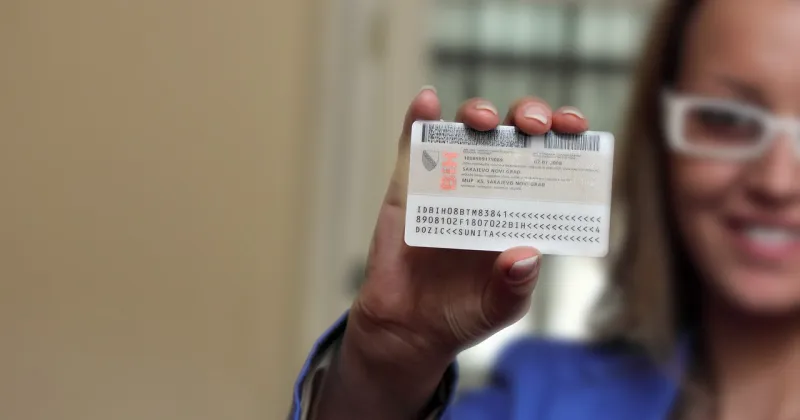
Voter ID in the UK: Photo ID to Vote and the Voter Authority Certificate
Voters in Great Britain now need photo ID to vote in person at many elections. Here is which elections it covers, what ID is acce…
9 November 2026

Single Transferable Vote Explained: How STV Works, Step by Step
Under the single transferable vote, you rank candidates in order and your vote moves on if it is not needed or cannot help. Here …
9 November 2026

How Does Proportional Representation Work? Lists, Quotas and Divisors
Proportional representation aims to give each party a share of seats close to its share of the vote. Here is how party-list syste…
9 November 2026