Home › Rights & the Constitution
Judicial Review: What It Is, the Grounds and How It Works
Judicial review lets a court check whether a public body acted lawfully, not whether it made the right choice. Here are the grounds, the time limits, the remedies and how the UK meaning differs from the American one.
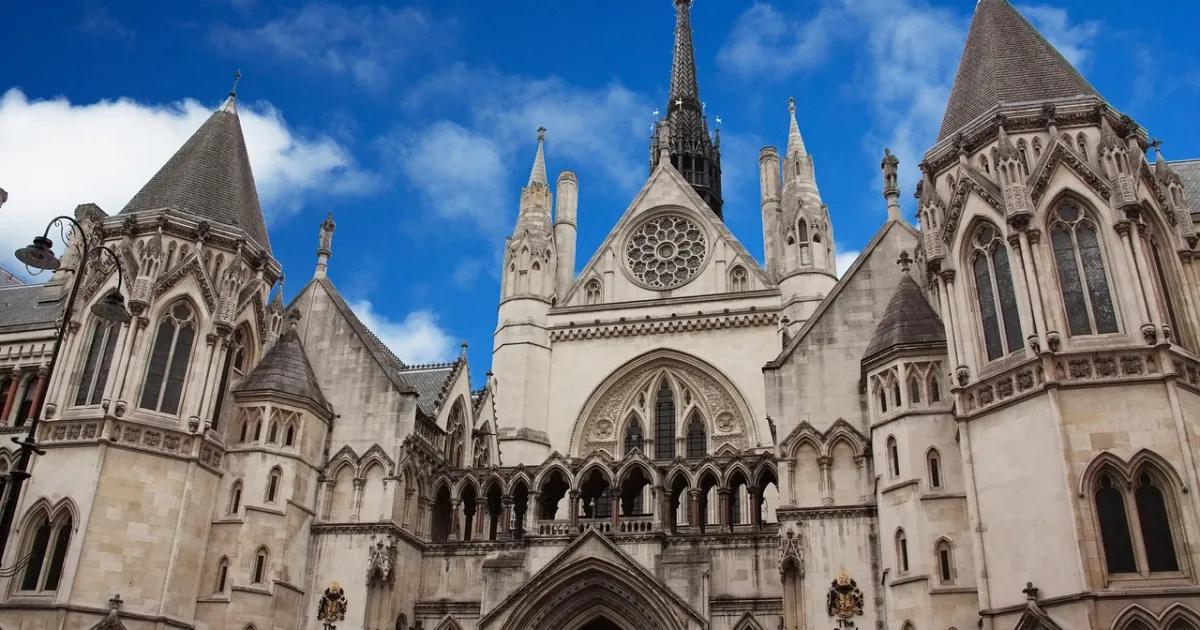
Judicial review is a court procedure in which a judge examines whether a decision or action of a public body was lawful. It is a challenge to the way a decision was made, not to whether the decision was the best one. If the body followed the law and the correct procedure, the court will not step in, even if the judge would have decided differently. This article describes the rules in England and Wales; it explains how the system works and is not legal advice.
What judicial review is, and is not
Public bodies, from government departments and local councils to regulators, only have the powers the law gives them. Judicial review is the means by which the courts keep them within those powers. The judiciary's own guidance gives examples of what can be challenged: local authority decisions about welfare benefits or special educational provision, certain immigration decisions, decisions of regulatory bodies, and decisions affecting prisoners' rights.
Three limits define it.
- It is about lawfulness, not merits. The court does not replace the public body's decision with the one it thinks is right. After a successful claim the body may be able to make the same decision again, as long as it does so lawfully. Someone who simply thinks a decision was wrong may be better served by an appeal, where one exists.
- It applies to public functions. The decision must have been taken by a public body or by a body carrying out a public function.
- Acts of Parliament cannot be reviewed. Under parliamentary sovereignty the courts cannot set aside primary legislation. They can review ministers' decisions and secondary legislation such as regulations. Our guide to how a bill becomes law explains the difference.
Claims in England and Wales are heard by the Administrative Court, part of the King's Bench Division of the High Court. Scotland and Northern Ireland have their own courts and procedures.
The grounds for judicial review
The classic statement of the grounds comes from the "GCHQ case", Council of Civil Service Unions v Minister for the Civil Service, decided by the House of Lords in 1984 and reported in 1985. The government had banned staff at the intelligence agency GCHQ from belonging to trade unions, acting under the royal prerogative. The Law Lords held that prerogative powers could be judicially reviewed, although on the facts national security justified the ban. In his speech Lord Diplock grouped the grounds under three heads.
| Ground | What it means | Typical example |
|---|---|---|
| Illegality | The decision-maker "must understand correctly the law that regulates his decision-making power and must give effect to it" | Acting beyond the powers given by statute, using a power for the wrong purpose, or taking irrelevant matters into account |
| Irrationality | A decision "so outrageous in its defiance of logic or of accepted moral standards that no sensible person who had applied his mind to the question to be decided could have arrived at it" | Also called Wednesbury unreasonableness, after a 1948 case. The test is a hard one for a claimant to meet |
| Procedural impropriety | Failing to follow the procedure laid down by law, or the common law rules of fairness | Not holding a required consultation; a decision-maker with a personal interest in the outcome; giving a person no chance to put their case |
Lord Diplock added that further grounds might develop case by case, and two matter today.
- Legitimate expectation. Where a public body has led people to expect, by a promise or settled practice, that it will act in a certain way, the courts may hold it to that.
- Human rights and proportionality. Under the Human Rights Act 1998 it is unlawful for a public authority to act incompatibly with a Convention right. In such cases the court asks whether an interference with a right is proportionate to the aim pursued. Proportionality has not become a general ground of review outside these areas.
Who can apply, and how quickly
Sufficient interest
Under the Senior Courts Act 1981 the court may allow a claim to proceed only if the applicant has "a sufficient interest in the matter to which the application relates". This is known as standing. A person directly affected by a decision will usually meet the test. The position of campaign groups and charities bringing cases in the public interest is less clear-cut and depends on the circumstances.
Time limits
The time limits are short. Under Part 54 of the Civil Procedure Rules the claim form must be filed:
- promptly, and in any event not later than three months after the grounds to make the claim first arose;
- within six weeks where the claim concerns a decision of the Secretary of State or a local planning authority under the planning Acts;
- within any shorter period that another statute lays down, with special rules for public procurement decisions.
The parties cannot extend these limits by agreement, and a claim brought inside three months can still fail for not being prompt. Before starting, a claimant is normally expected to send the public body a letter setting out the complaint, to which the body usually has 14 days to reply.
The permission stage
A judicial review claim cannot go to a full hearing as of right. The court's permission is required first. At this stage a judge can refuse permission if the claim is out of time, if the claimant lacks sufficient interest or if the dispute is not a matter of public law. Only claims that pass this filter go on to a substantive hearing.
Even a claimant who proves unlawfulness may not obtain a remedy. Remedies are at the court's discretion, and the Senior Courts Act requires the court to refuse relief if it appears "highly likely that the outcome for the applicant would not have been substantially different" had the error not been made.
Remedies
- Quashing order. Sets the decision aside. This is the most common remedy; the matter usually goes back to the public body to decide again lawfully.
- Prohibiting order. Forbids the body from doing something unlawful that it proposes to do.
- Mandatory order. Requires the body to carry out a duty it has failed to perform.
- Declaration. States what the law is or what the parties' rights are, without ordering anything.
- Injunction. Stops the body acting unlawfully, sometimes on an interim basis before the full hearing.
- Damages. Available only in limited circumstances, and never simply because a decision was unlawful.
Since 14 July 2022, under the Judicial Review and Courts Act 2022, a court making a quashing order can delay the point at which it takes effect, or remove or limit its retrospective effect.
Judicial review in the United States: a different meaning
The same phrase means something wider in American law. In Marbury v Madison (1803) the US Supreme Court established that American courts can strike down laws, including Acts of Congress, that they find to violate the Constitution. Judicial review in that sense is a check on the legislature as well as the executive.
UK courts have no such power over Acts of Parliament. Because the UK has no codified constitution that ranks above ordinary statutes, the most a court can do under the Human Rights Act is declare an Act incompatible with Convention rights, which leaves the Act in force. In the UK, judicial review is mainly a check on government and public bodies, not on Parliament. Our explainer on the UK constitution sets out why.
Common questions
What is judicial review in simple terms?
It is a court case in which a judge checks whether a public body acted lawfully when it made a decision. The judge looks at how the decision was made, not at whether it was the right decision.
What are the three grounds for judicial review?
Illegality, irrationality and procedural impropriety, as set out by Lord Diplock in the GCHQ case. Breach of a legitimate expectation and incompatibility with rights under the Human Rights Act are also relied on.
What is the time limit for judicial review?
In England and Wales the claim must be filed promptly and in any event within three months of the grounds arising. For planning decisions the limit is six weeks, and some statutes set shorter periods.
Can judicial review overturn an Act of Parliament?
No. UK courts can quash decisions of public bodies and secondary legislation, but they cannot strike down an Act of Parliament. That differs from the United States, where courts can invalidate laws that conflict with the Constitution.
Sources
- Courts and Tribunals Judiciary: Judicial review
- Ministry of Justice: Civil Procedure Rules, Part 54
- legislation.gov.uk: Senior Courts Act 1981, section 31
- legislation.gov.uk: Judicial Review and Courts Act 2022, section 1
- Wikipedia: Judicial review in English law
- Wikipedia: Council of Civil Service Unions v Minister for the Civil Service
The Ballot Primer is independent and non-partisan. Spotted an error? Tell us.
Keep reading

When Did Women Get the Right to Vote in the UK?
Women in the UK first voted in a general election in 1918, but only if they were over 30 and met a property test. Equal voting ri…
9 November 2026

What Is the Rule of Law? Meaning, Principles and Examples
The rule of law is the idea that everyone, including the government, must obey the law, and that laws must be public, clear and a…
9 November 2026

The Rule of Law as a British Value: What Schools Teach
Since 2014, schools in England have been expected to promote four fundamental British values, one of which is the rule of law. He…
9 November 2026