What Is a Hung Parliament? Meaning, Rules and What Happens Next
A hung parliament is one where no party has a majority of seats. Here is what it means, who stays in Downing Street while talks go on, and how past UK hung parliaments ended.
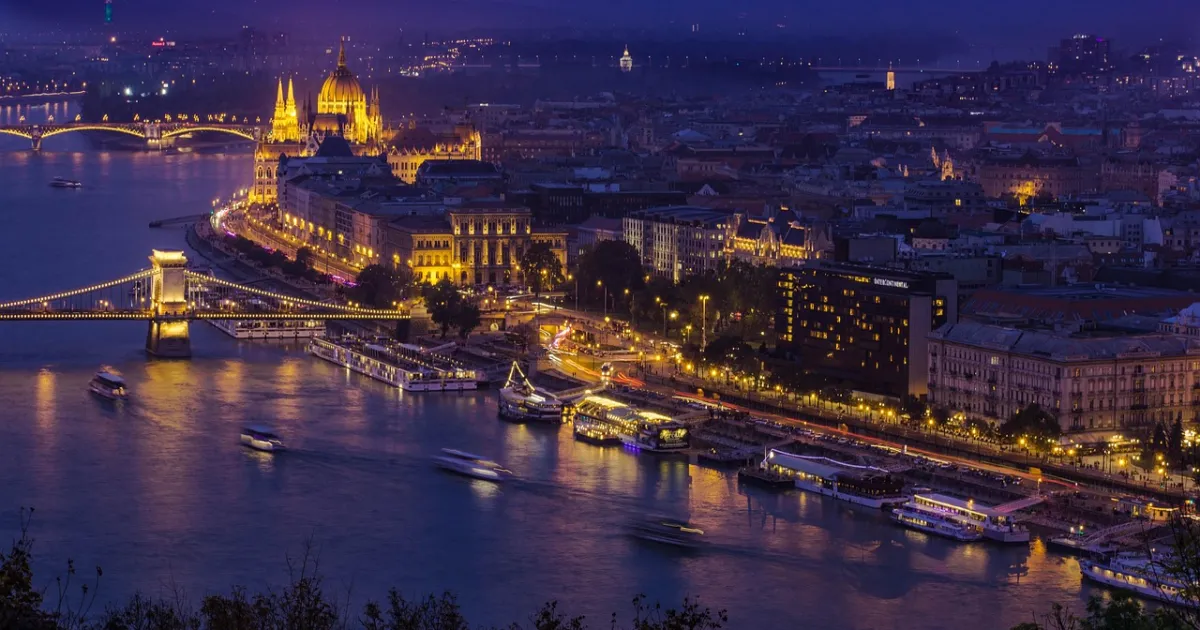
A hung parliament is a parliament in which no single party, or pre-existing coalition, holds an absolute majority of seats. In the House of Commons, which has 650 seats, a party needs 326 to have a majority on its own. When nobody reaches that number, no one has an automatic right to govern, and the parties have to work out who can win the support of the House.
The term is used mainly in Westminster-style systems such as the United Kingdom, Australia and New Zealand. It is also called a "balanced parliament". In UK local government, a council where no party has a majority is said to be under "no overall control".
What happens after a hung parliament is elected
The UK has no written constitution that sets out the steps, but the Cabinet Office's Cabinet Manual, first published in October 2011, describes the conventions that ministers and civil servants follow. Its main points are these.
- The sitting government stays in office. Where an election produces no overall majority, the incumbent government remains in office unless and until the prime minister resigns. Prime ministers hold office until they resign; there is no automatic handover.
- It may wait for Parliament to meet. The incumbent government is entitled to wait until the new Parliament has met to see whether it can command the confidence of the Commons. It is expected to resign if it becomes clear that it is unlikely to do so and there is a clear alternative.
- Confidence, not a majority, is the test. The manual says that commanding the confidence of the Commons "is not the same as having a majority or winning every vote". Confidence is tested by votes on motions of confidence or no confidence.
- The parties negotiate, not the monarch. The Sovereign would not expect to become involved in negotiations. It is for the parties, and especially the incumbent prime minister, to make clear who is best placed to command the confidence of the House.
- The civil service can help, even-handedly. If party leaders ask for civil service support in talks, it can be organised only by the Cabinet Secretary with the prime minister's authorisation, and must be provided on an equal basis to all the parties involved. This happened after the May 2010 election.
The manual also notes that, in recent cases, outgoing prime ministers did not offer their resignation until clear advice could be given on who should be asked to form a government. It leaves open whether this has become a binding convention.
The 2011 edition was written while the Fixed-term Parliaments Act 2011 was in force. That Act was repealed in 2022 by the Dissolution and Calling of Parliament Act 2022, so the manual's passages on that Act no longer describe the law.
The possible outcomes
The Cabinet Manual describes three broad types of government that can be formed when there is no overall majority. A fourth possibility is that no stable arrangement can be found and a new election follows.
| Outcome | What it means | UK example |
|---|---|---|
| Minority government | One party governs alone and wins votes with ad hoc support from others. | Labour after February 1974 |
| Formal inter-party agreement | A party outside government agrees to support it on set terms, such as confidence and supply. | The Lib–Lab pact of 1977–78; the Conservative–DUP agreement of 2017 |
| Coalition | Ministers from more than one party share government. | Conservatives and Liberal Democrats, 2010–2015 |
| Fresh election | A new vote is held, often within months. | October 1974 |
Coalitions are explained in detail in what is a coalition government, and support deals in our guide to confidence and supply.
UK hung parliaments
Hung parliaments have been unusual at Westminster. Earlier examples include both general elections of 1910, which left the Liberals and Conservatives with almost identical numbers of seats, and the election of 1929. After 1929 there was no hung parliament until 1974.
February 1974
The general election of 28 February 1974 gave Labour 301 seats and the Conservatives 297, with 318 needed for a majority in a 635-seat House. The Conservatives had won slightly more votes (37.9% against 37.2%). The sitting Conservative government opened talks with the Liberals about a possible coalition on 3 March, but the Liberals rejected the terms, and the prime minister resigned on 4 March. Labour then formed a minority government. A second election was held in October 1974, and Labour won a majority of three.
May 2010
The election of 6 May 2010 was the first since February 1974 to produce a hung parliament. The Conservatives won 306 seats, Labour 258 and the Liberal Democrats 57. The Labour government stayed in office while the parties talked, and the prime minister authorised civil service support for the negotiations. A Labour–Liberal Democrat deal was explored but would still have needed votes from smaller parties. After five days of talks, the Conservatives and Liberal Democrats agreed a coalition, and a new prime minister took office on 11 May.
June 2017
At the snap election of 8 June 2017 the governing Conservatives lost their majority, winning 317 seats to Labour's 262. The prime minister stayed in office and formed a minority government. On 26 June 2017 the Conservatives signed a confidence and supply agreement with the Democratic Unionist Party, which had 10 MPs, giving the government a working majority of 13. The agreement lasted until the 2019 general election.
Hung parliaments in other countries
- Canada: the phrase itself is not much used there, but six of the eight federal elections held from 2004 to 2025 left no party with a majority. In each case the largest party governed as a minority.
- Australia: the 2010 federal election produced a 72–72 tie between Labor and the Coalition. Labor governed with the support of four of the six crossbench MPs until 2013.
- New Zealand: no single party won a majority at any election from 1996 until 2020.
The pattern reflects the voting system. Under proportional systems, where seats follow votes, hung parliaments are common and parties expect to bargain. Under first past the post, single-party majorities are more common, so a hung parliament feels like an exception.
Common questions
What does hung parliament mean?
It means no single party has won more than half the seats in a parliament. In the House of Commons that means no party has 326 of the 650 seats, so a government needs support from more than one party to survive.
Who is prime minister in a hung parliament?
The sitting prime minister stays in office until they resign. Under the Cabinet Manual, the incumbent government can wait for the new Parliament to meet, but is expected to resign if it clearly cannot command the confidence of the Commons and there is a clear alternative.
Has the UK had a hung parliament recently?
Yes. The elections of 2010 and 2017 both produced hung parliaments. The first led to a Conservative–Liberal Democrat coalition; the second to a Conservative minority government supported by the DUP.
Does a hung parliament mean another election?
Not necessarily. Most hung parliaments lead to a coalition, a support agreement or a minority government. A new election is held only if no workable government can be formed, or if the government chooses to seek a majority, as happened in October 1974.
Sources
The Ballot Primer is independent and non-partisan. Spotted an error? Tell us.
Keep reading

Why Do UK Political Parties Have Colours? A Short History
Blue, red and yellow look like fixed facts of British politics, but for most of history party colours changed from town to town. …
9 November 2026

What Is a Political Party? What Parties Do and How UK Rules Work
Parties pick candidates, write programmes and organise both government and opposition. Here is what a political party is, how UK …
9 November 2026
What Is a Party Whip? Chief Whips, Three-Line Whips and Free Votes
Whips keep MPs voting with their party. Here is what the Chief Whip does, what one-, two- and three-line whips mean, when MPs get…
9 November 2026